

/https%3A%2F%2Fprofilepics.canalblog.com%2Fprofilepics%2F1%2F0%2F100183.jpg)
/https%3A%2F%2Fstorage.canalblog.com%2F03%2F02%2F119589%2F96711876_o.jpg)
/https%3A%2F%2Fstorage.canalblog.com%2F11%2F31%2F119589%2F94773502_o.jpg)
/https%3A%2F%2Fstorage.canalblog.com%2F20%2F83%2F119589%2F94772815_o.jpg)
/https%3A%2F%2Fstorage.canalblog.com%2F26%2F72%2F119589%2F75604929_o.jpg)
/https%3A%2F%2Fstorage.canalblog.com%2F59%2F60%2F119589%2F26458628_o.jpg)
Joseph Wright of Derby - The Artist's Liverpool Days at The Walker Art Gallery

Joseph Wright of Derby, An Academy by Lamp light: Private Collection. (1769. Oil on canvas. 127 by 101.6 cm.)

Joseph Wright of Derby, Two Boys Blowing a Bladder by Candlelight: The Henry E. Huntington Library, Art Collections and Botanical Gardens, San Marino. (Circa 1770. Oil on canvas. 88.9 by 69.9 cm.)
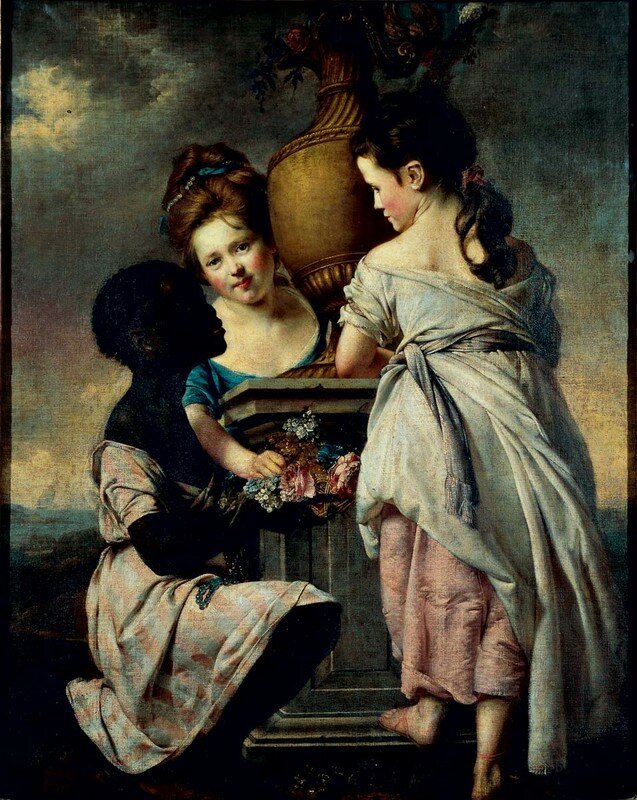
Joseph Wright of Derby, A Conversation of Girls: Private Collection, on loan to the National Museum of Wales, Cardiff. (By 1770. Oil on canvas. 127 by 101.6 cm.)

Joseph Wright of Derby, Richard Gildart: National Museums Liverpool. (1768. Oil on canvas. 125 by 100 cm.)

Joseph Wright of Derby, 'The Annual Girandola at the Castel Sant' Angelo, Rome' 1775-76,Walker Art Gallery (Oil on canvas, 138 x 173cm)

Joseph Wright of Derby, 'Mrs Frances Hesketh', Walker Art Gallery

Joseph Wright of Derby, 'Fleetwood Hesketh' 1769, Walker Art Gallery, Oil on canvas, 127 x 102 cm
Joseph Wright of Derby (1734 – 1797) played an important part in Liverpool‘s artistic history. Following an apprenticeship in London to the portraitist Hudson, Wright established from the late 1750s an extremely successful practice in his native Derby, with his literal and rather forthright portraits, often of leading Midland industrialists, and with his famous ‘candlelight’ views of scientific experiments.
Between late 1768 and summer 1771 he was based in Liverpool where he depicted several of the port’s leading slave-owning merchants as well as wealthy landowners from the Lancashire hinterland. ‘Richard Gildart’, a former Lord Mayor of Liverpool, ‘Fleetwood Hesketh of Meols’ and his wife ‘Frances Bold’, the coal heiress, are among the finest of this group. Wright was a friend of Richard Tate, an early member of the sugar-plantation dynasty. Wright’s presence in Liverpool helped galvanise local artists and contributed to attempts to set up a local Academy.
Wright’s trip to Italy following his marriage in 1774 led to an extension of his subjects to include views of Vesuvius erupting and the spectacular ‘Easter Monday’ firework display at St Peter’s in Rome; ‘the one the greatest effect of nature, the other of art’ as he described them. Wright’s landscape painting inspired by Italy included views like the ‘Convent of San Cosimato, Vicovaro’ – a classically conceived composition evocative of Gaspard Dughet. He subsequently became interested in more empirical landscape and was an early enthusiast for the Lake District.
In his later career Wright concentrated upon literary and mythological themes. ‘The Old Man and Death’, is based upon one of Aesop’s fables, and shows the terror-struck old man who gains his wish that the burden of life be lifted from him. Wright’s ‘The Lady in ‘Comus’’ of which he said he had ‘never painted a picture that was so universally liked’ was exhibited in 1785 at what was possibly the first one-man show in England. Based upon Milton’s masque ‘Comus’, it is one of a pair of pictures depicting female fortitude (its companion shows an Indian widow keeping nocturnal vigil over her husband’s grave). It was owned originally by the potter Josiah Wedgwood, one of the Midland manufacturers and supporters of scientific enquiry with whom Wright remained friendly throughout his life.
Like Stubbs, Wright is an artist whose reputation has increased enormously in the last forty years. Both are now usually celebrated for their ‘matter of fact’ depictions of people and places.
Joseph Wright of Derby, Liverpool Walker Art Gallery, Liverpool; until 24 Feb


/image%2F1371349%2F20260815%2Fob_89f80b_31166.jpg)
/image%2F1371349%2F20260814%2Fob_0c789a_telechargement.jpg)
/image%2F1371349%2F20260814%2Fob_f3fffb_770886458-2320211552082184-81227025763.jpg)
/image%2F1371349%2F20260813%2Fob_88eec5_772929666-2319625142140825-62068689842.jpg)