

/https%3A%2F%2Fprofilepics.canalblog.com%2Fprofilepics%2F1%2F0%2F100183.jpg)
/https%3A%2F%2Fstorage.canalblog.com%2F03%2F02%2F119589%2F96711876_o.jpg)
/https%3A%2F%2Fstorage.canalblog.com%2F11%2F31%2F119589%2F94773502_o.jpg)
/https%3A%2F%2Fstorage.canalblog.com%2F20%2F83%2F119589%2F94772815_o.jpg)
/https%3A%2F%2Fstorage.canalblog.com%2F26%2F72%2F119589%2F75604929_o.jpg)
/https%3A%2F%2Fstorage.canalblog.com%2F59%2F60%2F119589%2F26458628_o.jpg)
The Mahin Banu ‘Grape’ dish: a magnificent and storied blue and white dish, Ming dynasty, Yongle period, circa 1420
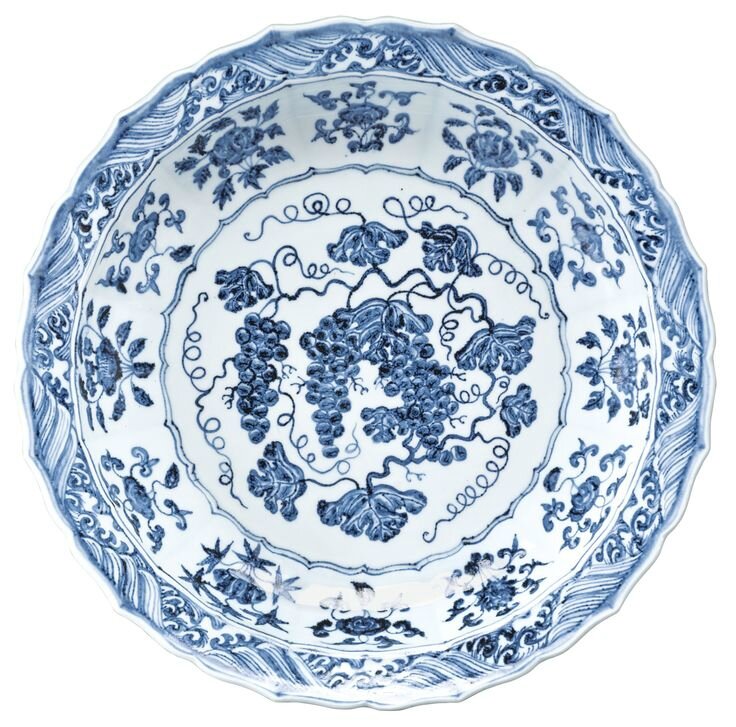
Lot 264. The Mahin Banu ‘Grape’ dish: a magnificent and storied blue and white dish, Ming dynasty, Yongle period, circa 1420. Diameter 17 in., 43.2 cm. Estimate 2,500,000 — 3,500,000 USD. Lot sold 5,122,000 USD. Photo Sotheby's.
NEW YORK, NY.- In circa 1420 craftsmen from the village of Jingdezhen in Jiangxi province created a magnificent blue and white dish which would become known as The Mahin Banu ‘Grape’ Dish. The piece has passed through some of the most distinguished collections ever assembled and now appears in the Important Chinese Works Of Art sale at Sotheby’s New York on 18 March 2015 with an estimate of $2.5/3.5 million.
CHINA
Under the Yongle Emperor (r. 1403-24) Chinese porcelain was transformed both in terms of quality and stylistic sophistication but also from a practical item of the imperial household to a commodity with economic and diplomatic potential for the Emperor. Jingdezhen porcelain such as The Mahin Banu Dish is known as the finest of that or any period for its pure white, setting off the intense blue design.
IRAN
Yongle Porcelain was distributed via both land and sea, often in exchange for horses, which were in short supply in China at this time. More exotically, records indicate that offerings of lions, giraffes, and leopards were also rewarded with gifts of fine silks and porcelain. It is unclear how the dish arrived in Samarkand, the capital of the Timurid Empire in present day Iran. We know nothing about the dish’s first owners, who may have been Timurid royals, but may also have been enterprising merchants, who undertook the dangerous overland voyage into Asia as self-appointed ‘official envoys’ and sold the goods on to rich customers. Five drilled owners’ marks on the dish are testimony to a repeated change of hands while the ular cartouche (vaqf) carved in the center of its base is testimony to ownership by Princess Mahin Banu Khanum (1519-62), the youngest daughter of the Safavid Shah Ismail who was also known as Shahzada Sultanum. Mahin Banu was an extraordinary woman, diplomat, influencer, philanthropist, and collector of porcelain and other treasures.
INDIA
An inscription on the foot of the dish indicate that it was in the possession of the Mughal Shah Jahan, third son of Emperor Jahangir, who ruled the Mughal Empire from 1628 to 1658 and who is best known for constructing the Taj Mahal as a mausoleum for his wife. Little can be surmised about the subsequent history of this dish, although in the latter half of the 19th and early 20th century, several collections of Chinese porcelain were assembled in India some of them acquired from royal Indian collections.
North America
The dish next surfaces in New York where it was purchased by Alastair Bradley Martin from J.J. Klejman Works of Art in 1967. Mr. Martin and his wife Edith assembled a revered collection of choice masterworks across countless periods and cultures called the Guennol Collection. From 1968-1991 the dish was on loan and display at the Metropolitan Museum of Art, New York and was then at The Brooklyn Museum of Art from 1991-2006.


Lot 264. The Mahin Banu ‘Grape’ dish: a magnificent and storied blue and white dish, Ming dynasty, Yongle period, circa 1420. Diameter 17 in., 43.2 cm. Estimate 2,500,000 — 3,500,000 USD. Lot sold 5,122,000 USD. Photo Sotheby's.
superbly painted in the center in rich tones of cobalt-blue with three bunches of grapes borne from a gnarled vine issuing characteristically broad furled leaves, detailed with veining, and delicately coiling tendrils, the cavetto subtly lobed in twelve panels each enclosing a floral spray; rose, peony, lotus, camellia, chrysanthemum and mallow alternating with leafy lingzhi sprigs, the barbed rim encircled by a band of roiling white-capped waves, the underside with similar floral sprays within the bracket-lobed panels, the base unglazed and with several markings; an inscription on the side of the foot and another along the base of the foot read Shah Jahan ibn Jahangir Shah 16 (regnal year) AH 1053, corresponding with AD 1643-4; a circular inscription reads waqf-e...razavi 'abduhu mahin banu safavi; a weight measure in black '252 tulah', and several unidentified drilled collectors marks.
Provenance: Mahin Banu Khanum (1519-1562) daughter of the founder of the Safavid dynasty, Shah Ismail I. (r. 1501-1524.)
Shah Jahan (r. 1628-1658), fifth emperor of the Mughal Dynasty of Northern India.
J.J. Klejman Works of Art, New York.
Guennol Collection, acquired 22nd September 1967.
Exhibited: Art Treasures of Turkey, Metropolitan Museum of Art, New York, 1968.
Metropolitan Museum of Art, New York, on loan and display 1968-1991.
The Brooklyn Museum of Art, New York, on loan and display from 1991-2006.
The Guennol Collection: Cabinet of Wonders, The Brooklyn Museum of Art, New York, 2000, cat. no. 31.
Gifts of the Sultan: The Arts of Giving at the Islamic Court, Los Angeles County Museum of Art, 2011; Museum of Fine Arts Houston, 2011-12, cat. no. 99, illustrated on p. 63, fig. 58, with a detail of the engraved medallion with inscription in the center of the base. The dish is discussed on p. 67.
Literature: The Guennol Collection, vol. I, The Metropolitan Museum of Art, New York, 1975, pp. 287-290.
Suzanne G. Valenstein, A Handbook of Chinese Ceramics, The Metropolitan Museum of Art, New York, 1975, p. 129, fig. 41.
Abolala Soudavar, "A Chinese Dish from the Lost Endowment of Princess Sutanum (925-69/1519-62)", in Kambiz Eslami, ed. Iran and Iranian Studies in Honor of Iraj Afshar, Princeton, 1998, pp. 125-134, figs. 1-3.
Frances Z. Yuan, "Chinese Art, the Wonder Cabinet and the Guennol Collection", Orientations, March 2000, vol. 31, no. 2, pp. 84-89, figs. 8 and 8a.
Note: One of the great classic patterns of the early Ming, these dishes, always featuring three clusters of grapes issuing from a single stem, vary in few but important ways; the sides are lobed or rounded and the rims are straight or barbed. It is important to note that of all remaining examples, only one other dish of this precise design is published: a blue and white 'Grapes' dish with a foliate-rimmed border of breaking waves from the Ardebil Shrine is illustrated in John Alexander Pope,Chinese Porcelains from the Ardebil Shrine, London, 1981, pl. 37 (figs 1 and 2).
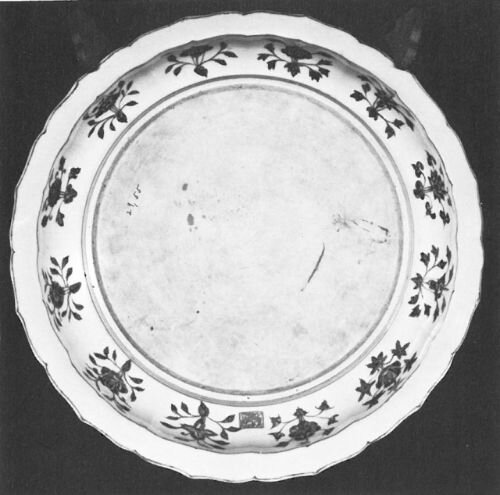
Fig 1. John Alexander Pope, Chinese Porcelains in the Ardebil Shrine, London, 1981, pl. 37. Photograph © Sotheby’s.

Fig 2. John Alexander Pope, Chinese Porcelains in the Ardebil Shrine, London, 1981, pl. 37. Photograph © Sotheby’s.
Other similar examples which have a wave border similar to the present example terminate in flat rims such as one in the Topkapi Museum, Istanbul, illustrated by Regina Krahl, Chinese Ceramics in the Topkapi Saray Museum, vol. 2, London, 1986, no. 606 (TKS 15/1456); another in the Ardebil shrine illustrated in Pope (ibid pl. 38); and a dish from the Avery Brundage Collection in the Asian Arts Museum, San Francisco similarly inscribed with the name of the Mughal Shah Jahan ibn Jahangir Shah (AD 1593-1666) and a date equivalent to AD 1643-4 and previously sold in our London rooms 24th March 1964, lot 96 is illustrated in He Li, Chinese Ceramics, London, 1996, p. 220, no. 400; another from the T. Y. Chao and R. E. R. Luff collections exhibited at the Hong Kong Museum of Art, Ming and Ching Porcelain in the Collection of the T. Y. Chao Family Foundation, illustrated in the Catalogue, 1978. A dish reputedly given by the Empress Dowager Cixi (1835-1908) to Sir Robert Hart, Inspector General of the Imperial Maritime Customs at the Chinese Treaty Ports, on his retirement in 1908, sold in our London rooms, 13th December 1966, lot 79. A dish of this pattern but of slightly smaller dimension from the Meiyintang Collection was sold in our Hong Kong rooms 4th April 2012, lot 21.
Examples of 'grape' dishes with barbed rims vary from the present example being painted along the rim with a continuous floral scroll pattern most often described as 'blackberry-lily'. For an example preserved in the Palace Museum, Beijing, see Geng Baochang, ed., Gugong Bowuyuan cang Ming chu qinghua ci [Early Ming blue-and-white porcelain in the Palace Museum], Beijing, 2002, vol. II, pl. 133. Another of this type in the China National Museum is illustrated in Zhongguo guojia boguan, ciqi juan, ming dai, guancang wenwu yanjiu chonghsu, Shanghai, 2006, pl. 38. For an example in the Ardebil shrine, which holds eleven 'grape' dishes, see Pope (op.cit., pl. 38.) Another, in the British Museum, London, is illustrated in Jessica Harrison-Hall, Ming Ceramics in the British Museum, London, 2001, pl. 3:36, where the author mentions that this grape dish pattern became the most influential design model for Iznik potters making blue and white wares in the 1530s and 1540s. Another example of this type gifted by Mr. and Mrs. F. Gordon Morrill, is in the Boston Museum of Fine Arts and illustrated in Wu Tung, Earth Transform, Chinese Ceramics in the Museum of Fine Arts, Boston, 2001, p. 115.
Fragments of 'grape' dishes have been recovered from the waste heaps of the Ming Imperial kilns at Jingdezhen examples of which are illustrated in Imperial Hongwu and Yongle Porcelain Excavated at Jingdezhen, Chang Foundation, Taipei, 1996, pl. 44; and Imperial Porcelain of the Yongle and Xuande Periods Excavated from the Site of the Ming Imperial Factory at Jingdezhen, Hong Kong Museum of Art, 1989, cat. no. 90.

Porcelain Diplomacy. BY REGINA KRAHL
Under the Yongle Emperor (r. 1403-24) Chinese porcelain was transformed, and in more than one way. Not only did its material quality and stylistic sophistication jump to unprecedented heights; its value to the court also evolved from that of an exquisite, practical item of the imperial household to becoming a commodity with economic and diplomatic potential for the Emperor.
The Yongle Emperor was an outward looking monarch, but in quite a different way from the Mongol Emperors of the Yuan dynasty (1279-1368), who had facilitated international trade. He had great ambitions to propagate China’s supremacy internationally and at the same time to control and channel encounters with foreign countries. To that end he made use of all China had to offer and submitted China’s resources to a new regimentation.
China had no monopoly on silk, but silk was probably its most important export product. Silks were lavishly bestowed on foreign rulers abroad and diplomatic missions that arrived in China. But being highly perishable, not lasting much longer than a generation, the gifts would not retain their value and thus fulfil their diplomatic purpose for very long. China had a monopoly on porcelain, and while porcelains were cumbersome to transport, they were durable, could be mended even when broken, and carried their message as tokens of China’s ingenuity, superiority and generosity from generation to generation and even from state to state, when they changed hands across borders.
It was only a few generations earlier, shortly before the Chinese had reconquered the Chinese throne from the Mongols and founded the Ming dynasty (1368-1644), that blue-and-white porcelain had emerged at Jingdezhen in Jiangxi province and had rapidly ‘conquered’ all of Asia. It had become the preferred tableware of potentates everywhere, an unobtainable luxury for most commoners, often known only from hearsay, which contributed to its almost mythical status. Yet in the Yuan dynasty it had been available on the market and with sufficient funds could be bought. The Hongwu Emperor (r. 1368-98) had reversed the free market policy of the Mongols and tightly controlled all international trade, totally excluding foreigners from the lucrative export of Chinese goods. The Yongle Emperor made active use of those goods, which the world desired and China was best equipped to supply.
In order to make porcelains suitable ‘ambassadors’ of the Ming Empire, their production had to be carefully monitored. Commercial porcelain factories seem to have ceased operation. Porcelain was produced only for the imperial court and the output of the Jingdezhen kilns reached a peak of excellence. Quality control was maximized so as to make Chinese porcelains impeccable. Seconds and surplus were relentlessly destroyed and buried to avoid their entering into circulation. Seconds simply do not exist of Yongle porcelain. Designs were jealously guarded against outside eyes, so no copies could be made by lesser kilns that might be confused with the original and in this way harm repute and prestige of this magical product. The many Persian, Syrian, Turkish and other Western Asian copies that exist are indeed generally of much later date.
Porcelain was produced for the court, its specifications defined and quality monitored by the court, its secrecy strictly guarded by the court, and its distribution organized by the court and assured through official channels. At excavation sites in the Near and Middle East, which have brought to light Chinese trade ceramics from the Tang (618-907) through to the Qing dynasty (1644-1911), Yongle wares are basically absent. They could not easily be obtained, even with money, and therefore were highly valued from the moment they left China – an appreciation that never waned.
The distribution of Yongle porcelain from the kilns was ensured through several routes, all of them official: via China’s vast maritime expeditions under the leadership of the Muslim court eunuch Zheng He (1371-1433), who sailed seven times with huge fleets to ports all over Asia and as far as East Africa; via China’s overland expeditions to the Timurid court under the court official Chen Cheng (1365-1457), who travelled three times to Iran, visiting Samarkand and Herat; and via official foreign embassies received by the Emperor in the Chinese capital.
Iranian merchants had been the main traders in China during the Mongol reign, and Iran remained the major trading partner for China also in the early Ming period. After an interruption in the Hongwu reign, the Yongle Emperor re-established a good relationship to the Timurid ruler Shahrukh Mirza (r. 1405-47), which led to a frequent mutual exchange of embassies.
China always had an acute shortage of fine horses, which had to be imported from lands further west and thus welcomed this form of trade. Not all foreign ‘tributes’ were, however, of this useful nature. A joint embassy sent by Shiraz and Isfahan in 1419, for example, presented besides fine horses also a lion and a leopard to the Yongle Emperor and was richly rewarded with presents of ‘fine silks, girdles and porcelain vessels’ for the respective rulers.1 A giraffe thus brought to China and presumably exchanged for porcelain was immortalized in a Chinese painting.2 The Chinese imperial house looked after the embassies during their stay in China, and followed a policy of gracious generosity, giving more than they received. The tribute exchange was so lucrative to the foreigners that the strict system was daringly circumvented and unofficial embassies of private Central Asian merchants purporting to come from the Timurid ruler arrived in China. China’s officialdom duly complained that the expenses for the growing number of missions were too costly, in particular since gifts such as the exotic animals were little appreciated and deemed useless.
More Yongle porcelain thus seems to have reached Timurid Persia than any other state, and the present dish is most likely to have come to Iran directly from China, at the time it was made. We know nothing about its first owners, who may have been Timurid royals, but may also have been enterprising merchants, who undertook the dangerous overland voyage as self-appointed ‘official envoys’ and sold the goods on to rich customers. At least four3 drilled owners’ marks on the dish are testimony to a repeated change of hands as well as the great esteem the piece washeld in. Such permanent identification may signify pride of ownership as well as fear of theft. These drilled markings would have been applied soon after the dish had reached Iran. They are most frequently seen in a Persian context, typically on Yongle and earlier porcelains and rarely on pieces postdating the 15th century.
Although many Yongle porcelains are found in the Topkapi Saray collection in Istanbul, some also with drilled owners’ marks, Iran was most likely the most important (secondary) source for these wares as well, as they predate the establishment of the Ottoman Empire in Constantinople in 1453. Although the Ottomans may have received some Yuan and early Ming porcelains already in their previous capital Edirne, the numbers are likely to have been small and the contacts again indirect. Drilled markings which some Topkapi Saray porcelains share with pieces donated to the Ardabil Shrine in Iran by Shah Abbas (r. 1588-1629) in 1611, support the assumption that they were not applied in Turkey, but earlier on in Iran.
In India Chinese blue-and-white is documented already in the Yuan dynasty, but porcelain collecting was much less important there than in Iran. Due to a general bias against the material by Hindus, who indiscriminately deemed ceramics to be unclean, collecting in India was done mostly by Muslims, and little appears to have come directly to India in the early and mid-Ming period, before the beginning of Mughal rule in 1526.
In the 16th century, Chinese porcelain frequently changed hands between the three major powers of South and West Asia, the Safavids of Iran, the Mughals of India, and the Ottomans of Turkey, both in the form of friendly diplomatic offerings and as highly coveted war booty. The Ottoman Sultan Selim I (r. 1512-20) seized porcelains in Persia, Syria and Egypt in the early 16th century and later received generous gifts of porcelain from Persia. Shah Tahmasp (r. 1524-76), presented Suleiman the Magnificent (r. 1520-66) as well as his sons, Selim II (r. 1566-74) and Prince Bayezid (1525-61), with porcelains from the mid-16th century onwards, and such gifts continued through the 17th century and into the 18th. Lesser numbers of porcelains also appear to have arrived in Istanbul from India, with one large gift of two hundred Chinese porcelains reputedly sent to Suleiman the Magnificent. Exchanges between Safavids and Mughals are equally documented, and a white bowl of Hongzhi mark and period (1488-1505), engraved with the seal of Emperor Jahangir (r. 1605-27) was, for example, included in the Ardabil Shrine donation.
The present dish, however, appears to have remained in Iran for well over a century and in the 16th century was in the hands of Safavid royalty. The circular cartouche (vaqf) carved in the center of its base is testimony to ownership by Princess Mahin Banu Khanum (1519-62), also known as Shahzada Sultanum, youngest daughter of the Safavid Shah Ismail (r. 1501-24) and Tajlu Khanum, and full sister of Shah Tahmasp. Mahin Banu was a remarkable, highly accomplished and cultured woman, who became an influential advisor to her brother and thus played an important political and diplomatic role in the Empire herself. She remained unmarried, apparently largely due to her brother’s jealous watch over her. She exchanged diplomatic correspondence with another powerful woman of the time, Roxelana (c. 1500-1558), or Hürrem Sultan, wife of the Ottoman Sultan Suleiman the Magnificent, and played a crucial intermediary role in Shah Tahmasp’s dealings with the Mughal Emperor Humayun (r. 1531-40). She employed her own considerable wealth, which derived from properties in Shirvan, Tabriz, Qazvin, Ray, and Isfahan, to support shrines, places of pilgrimage and religious foundations. She established an endowment for the welfare of women, in particular to help orphan girls into marriage. She patronized Persian art and literature and practised calligraphy. And she appears to have assembled a collection of porcelains, which at her death was made into a pious gift together with her jewels.4
Much of her charitable work was devoted to the Shrine of Ali al-Ridha (766-819), known as Imam Reza, the Eighth of the Twelve Imams venerated in Shia Islam. His shrine in Mashhad, which was constantly enlarged and enhanced, claims to be the largest mosque in the world. Mahin Banu’s porcelain collection otherwise seems to have been dispersed. No porcelain is recorded to remain at the Shrine and the present dish is currently the only example that can be traced to this distinguished royal collection and its donation, due to its inscription.
Abolala Soudavar states in his essay on the present piece that the dish could only have been removed from the Shrine during the conquest of Mashhad by the Uzbeks in 1590, quoting Eskandar Beyg-e Torkamãn, that the Uzbek troops “looted every gold and silver object, jewel studded lamps, carpets, valuable Qorãns and ‘Chinese vessels,’ and subsequently traded them ‘for the price of cheap ceramic shards’ among themselves”5. It is probably at that time that an attempt was made to efface the vaqf marking on the dish. He suggests that the looted items were then sent to Transoxiana, where the Mughal Emperors managed to acquire some.
Not long after, before the middle of the 17th century, the dish reappeared in the possession of the Mughal Shah Jahan, third son of Emperor Jahangir, who ruled the Mughal Empire from 1628 to 1658. Another inscription, this time elegantly engraved by a court engraver around the foot of the dish, attests to its acquisition in AD 1643/4 (AH 1053), while Shah Jahan resided in Agra and had the Taj Mahal constructed there. Soudavar argues that with its vaqf (religious endowment) inscription, it would only have been acceptable to Shah Jahan if its base at the time had been covered by some kind of mount to hide it, and believes this may also be the reason that Shah Jahan’s own inscription appears at the side of the foot.
Shah Jahan’s porcelain collection is also dispersed today, but we know a little more about it than about that of Mahin Banu, as seven or eight further pieces bearing his engraved inscription and/or dates are recorded among others:

1) A Yongle blue-and-white dish with a lotus scroll with two large blooms, formerly in the Trevelyan collection and now with the National Trust at Wallington, Northumberland, that entered the collection of Shah Jahan in the first year of his reign, AD 1628 (AH 1037) (fig. 1)
2) A Yongle blue-and-white dish with a scroll of four different flowers and a date pertaining to AD 1632 (AH 1042), sold at Sotheby’s London, 19th June 1984, lot 249 (fig. 2).

3) A Yuan dynasty blue-and-white dish of unknown design, with a date equivalent to AD 1634/5 (AH 1044), a Mughal heirloom piece placed into the Bibi-Ka-Maqbara in Aurangabad, the mausoleum of Dilras Banu Begum built either by her husband, Emperor Aurangzeb (r. 1658-1707), son of Shah Jahan, or by her son, Prince Azam Shah, in the latter part of the 17th century, which also contained a sizeable porcelain collection; the dish was later moved to the Archaeological Museum, Hyderabad (fig. 3).

4) A Yongle blue-and-white grape dish with straight rim and a continuous flower scroll around the sides, with a date referring to AD 1645 (AH 1054), formerly in the collection of R. Harris, sold at Sotheby’s London, 24th March, 1964, lot 96, later in the Avery Brundage Collection and now in the Asian Art Museum of San Francisco (fig. 4).

5) A Yuan dynasty blue-and-white dish painted with a qilin in a garden setting, and inscribed with a date equivalent to AD 1653 (AH 1063), formerly probably in the collection of Mrs. William van Horne, Montreal, sold at Sotheby’s London, 6th June 1967, lot 39, later in the Rockefeller 3rd Collection and now in the collection of the Asia Society, New York (fig. 5).
Other Mughal emperors and royals are also known to have owned Chinese porcelains, but Shah Jahan’s assemblage of early blue-and-white and gold-decorated porcelains must have surpassed all others and thus echoes the well-documented magnificence of this Emperor’s court. Little can be surmised about the subsequent history of this dish, although in the latter half of the 19th and early 20th century, several collections of Chinese porcelain were assembled in India, most notably that of William Cummins which consisted of some 600 pieces, some of them acquired from royal Indian collections. Yongle pieces, however, remained exceedingly scarce in such holdings.
Yongle ‘grape dishes’ are also included in the remains of the royal Ottoman and Safavid collections, and are equally found in the Chinese imperial court collection, none, however, of the exact pattern of the present piece, which represents the rarest version of the grape design. Grapes are a motif not native the central China, but associated with Central and Western Asian lands. As a decoration on Chinese artefacts they always appeared when international trade via the Silk Route was flourishing, particularly in the 6th and the 14th centuries. In the Yongle reign the design became a popular motif for blue-and-white porcelain and several different versions are known. The two most frequently seen are examples with a delicate flower scroll instead of waves on the barbed rim, and dishes with plain circular rim with wave design and a continuous flower scroll around the well. Dishes with these variants of the design had entered both the Safavid royal collection at Ardabil, Iran, and the Ottoman royal collection at Topkapi Saray, Istanbul, Turkey, and were present in the Chinese imperial collection at least since the Qing dynasty, and are remaining in the Palace Museum, Beijing, today.
Nevertheless, it is the present version of the design that was precisely copied in the 16th century by the Iznik pottery kilns in Turkey, as can be seen on a piece in the Metropolitan Museum of Art, New York. Even if the present dish may in its long wanderings never have reached Turkey, a companion piece, made at the same time, perhaps by the same hands, took another route and ended up further west. Yongle porcelains thus fulfilled a remarkable diplomatic role as ambassadors propagating China’s brilliant culture – a role they fulfil to this day.
1 E. Bretschneider, Mediaeval Researches from Eastern Asiatic Sources, London, 1910, vol. II (reprinted from 1875), p. 293.
2 Jessica Harrison-Hall, Catalogue of Late Yuan and Ming Ceramics in the British Museum, London, 2001, p. 121, fig. 3.
3 The exact number is difficult to ascertain since marks with a smaller number of dots could easily be modified by new owners by adding more dots. The lozenge-shaped four-dot mark, for example, whose dots are somewhat irregular, could well have started as a two- or three-dot marking.
4 Kishwar Rizvi, “Gendered Patronage: Women and Benevolence during the Early Safavid Empire”, Women, Patronage, and Self-Representation in Islamic Societies, ed. D. Fairchild Ruggles, Albany, 2000, pp. 128f.
5 Abolala Soudavar, ‘A Chinese Dish from the Lost Endowment of Princess Sultanum (925-69/1519-62)’, in Kambiz Eslami, ed., Iran and Iranian Studies in Honor of Iraj Afshar, Princeton, 1998, pp. 125-34.
Sotheby's. Important Chinese Works of Art, New York, 17 March 2015


/image%2F1371349%2F20260327%2Fob_ea80a1_1000060128.jpg)
/image%2F1371349%2F20251215%2Fob_58f5d1_telechargement-61.jpg)
/image%2F1371349%2F20251215%2Fob_e86cf1_telechargement-24.jpg)
/image%2F1371349%2F20250316%2Fob_a520eb_telechargement-10.jpg)