

/https%3A%2F%2Fprofilepics.canalblog.com%2Fprofilepics%2F1%2F0%2F100183.jpg)
/https%3A%2F%2Fstorage.canalblog.com%2F03%2F02%2F119589%2F96711876_o.jpg)
/https%3A%2F%2Fstorage.canalblog.com%2F11%2F31%2F119589%2F94773502_o.jpg)
/https%3A%2F%2Fstorage.canalblog.com%2F20%2F83%2F119589%2F94772815_o.jpg)
/https%3A%2F%2Fstorage.canalblog.com%2F26%2F72%2F119589%2F75604929_o.jpg)
/https%3A%2F%2Fstorage.canalblog.com%2F59%2F60%2F119589%2F26458628_o.jpg)
A white jade 'tiger' carving, Ming Dynasty

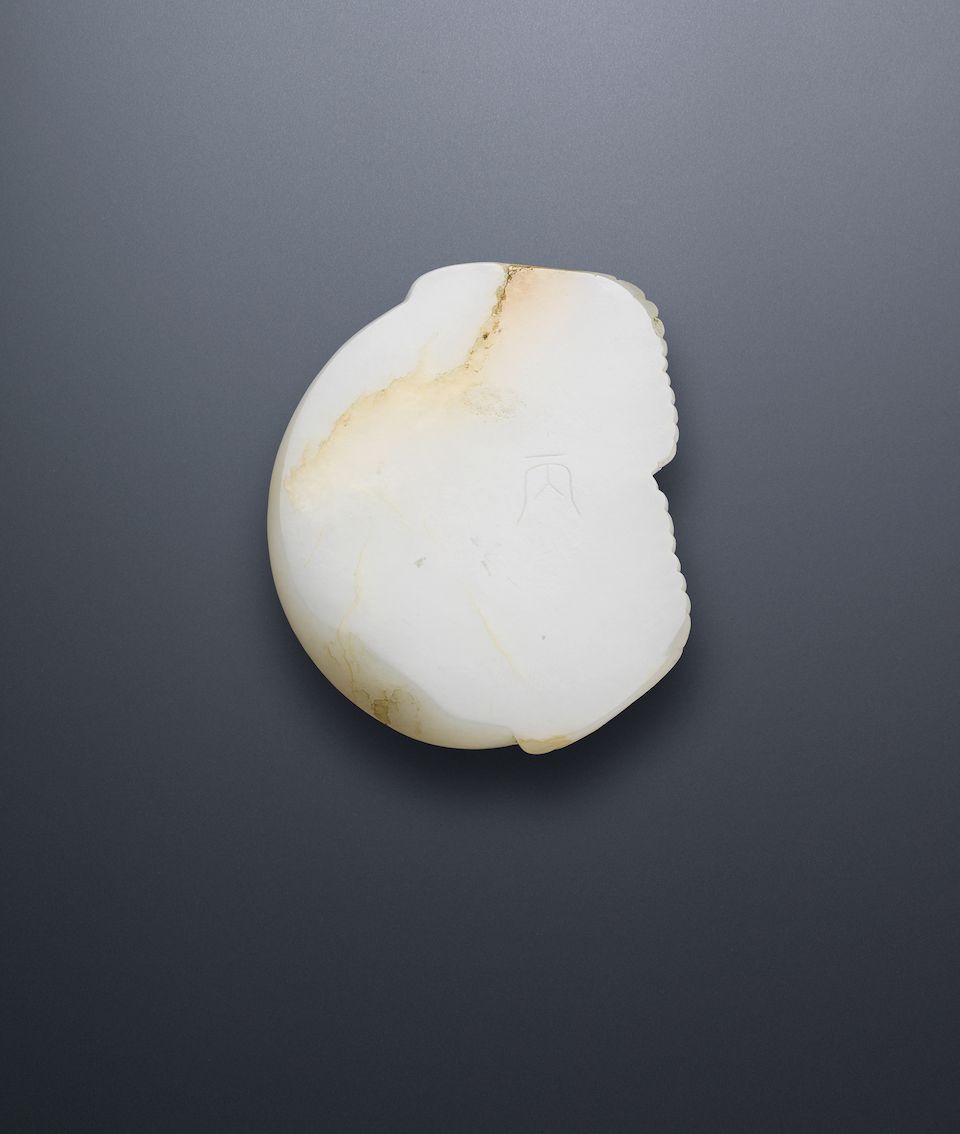
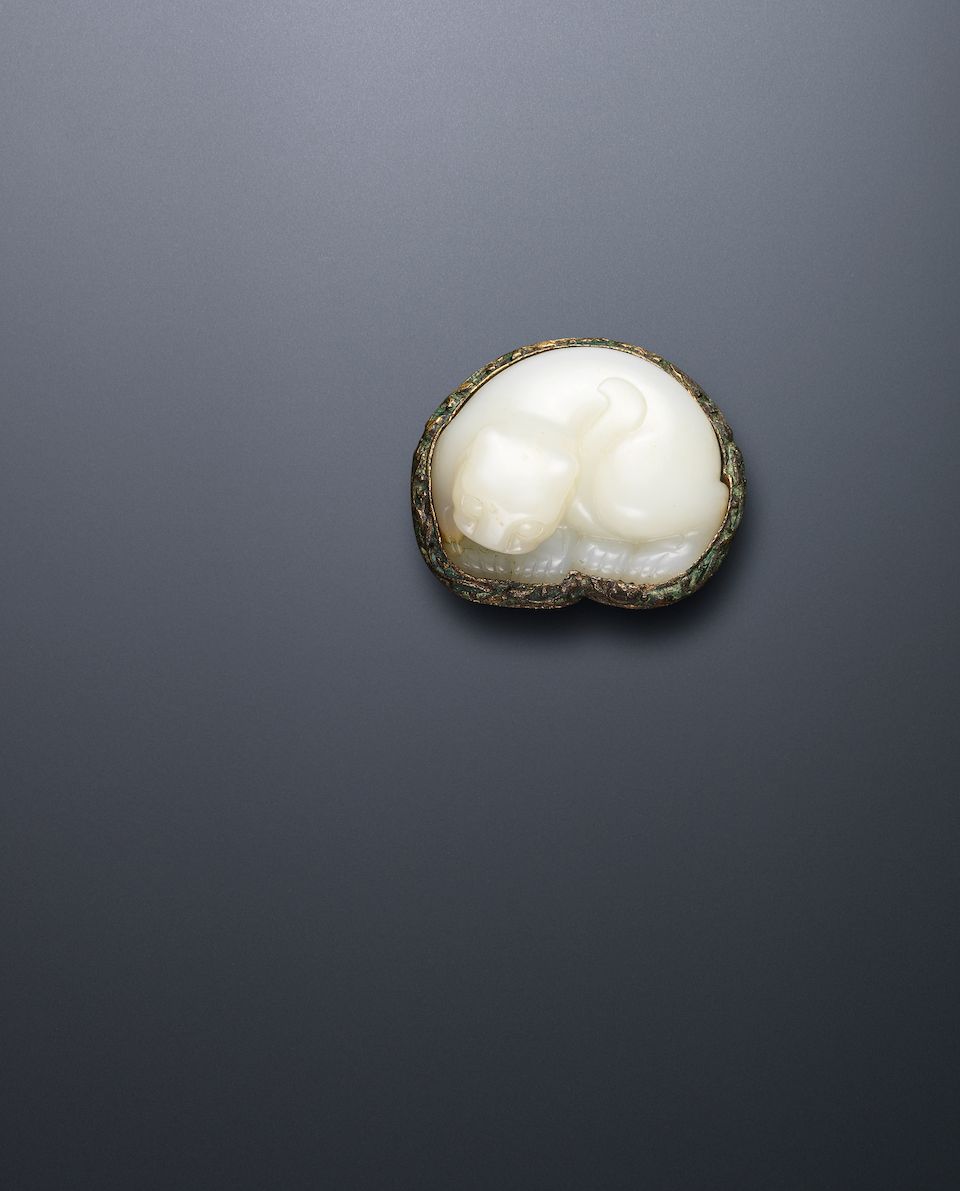
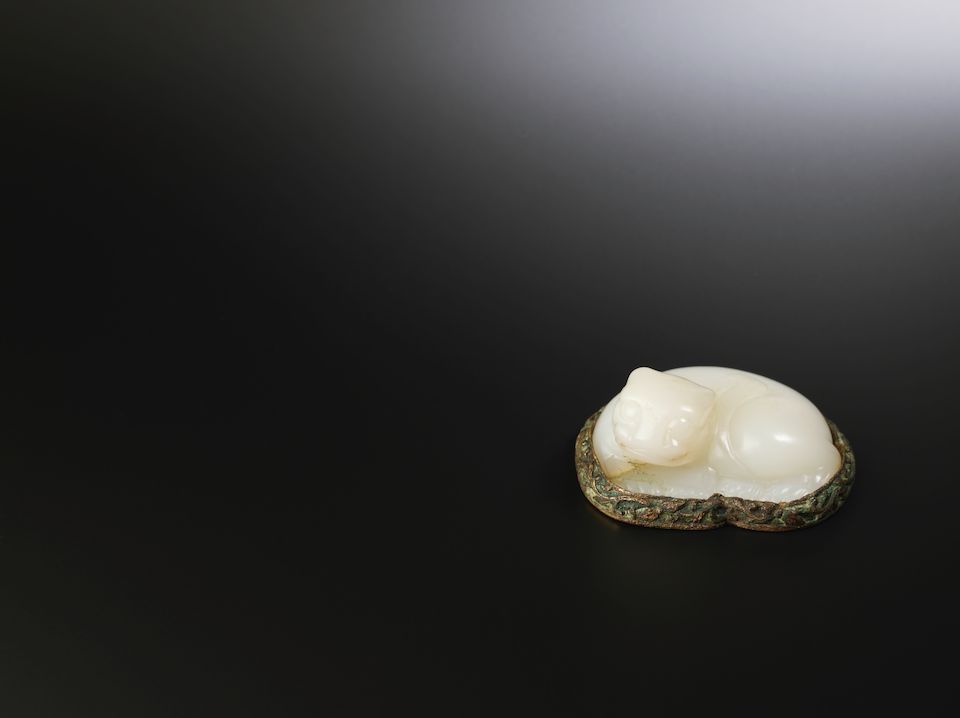
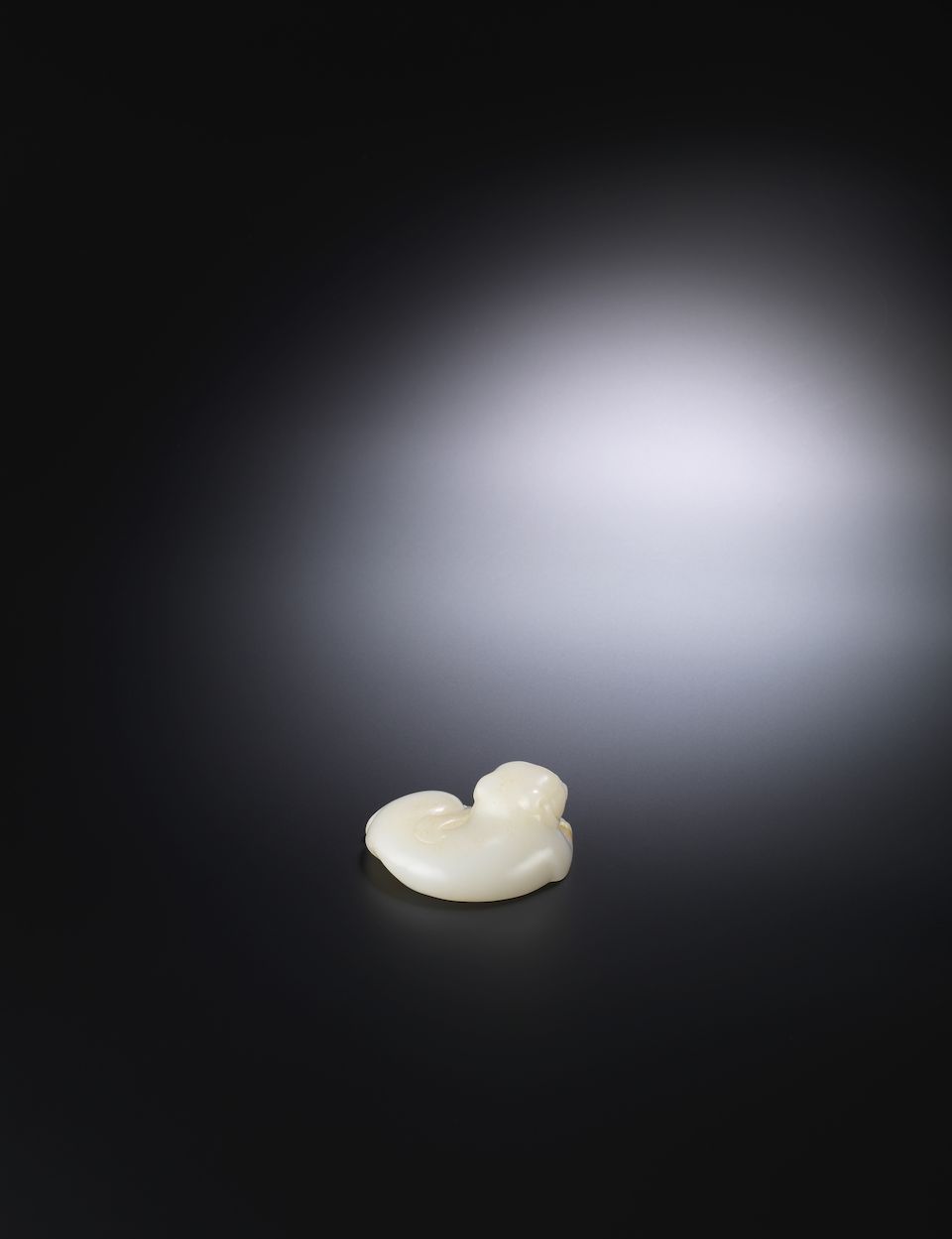
Lot 46. A white jade 'tiger' carving, Ming Dynasty; 6.8cm (2 5/8in) long. Estimate HK$100,000 - 150,000 (€11,000 - 17,000). Sold for HK$ 1,360,000 (€ 162,588). Photo Bonhams.
Carved recumbent with all four paws lined up resting in front of the body, detailed with head raised and bulging eyes staring ahead, the elongated tail swept up onto its back, the base with an incised zhuanshu character, the even white stone with russet veins, fitted gilt-bronze base (2).
Published and Illustrated: Art and Imitation in China, Hong Kong, 2006, p.123, no.18
Exhibited: University Museum and Art Gallery, The University of Hong Kong (14 October - 17 December 2006)
Note: he incised character at the base reads 丙 bing and can be translated as 'third', which may be associated with a numbering system.
The tiger has long been one of the oldest symbols for protection in China and is considered as one of the most powerful beasts for warding off evil. The tiger motif inspires both awe and admiration, and also embodies the spirit and drive for success.
Jade carvings of recumbent tigers in this style appear from as early as the Han dynasty, which were in turn stylistically inspired by Western Han gilt-bronze figures of tigers. Examples of jade tiger prototypes from the Han dynasty include: one with paws also arrayed in a row, illustrated by J.Watt, Chinese Jades from Han to Ch'ing, New York, 1980, p.40, no.9; and another exhibited in the Hong Kong Museum of Art, Hong Kong, illustrated in Chinese Jade Animals, Hong Kong, 1996, pp.80-81, no.46. See also another related Southern Song example with a flat base and paws held-together in the Victoria and Albert Museum, London, illustrated by M.Wilson, Chinese Jades, London, 2004, p.72, pl.75.
Bonham's. THE SZE YUAN TANG COLLECTION OF CHINESE JADES, 5 April 2016, 11:00 HKT, HONG KONG, ADMIRALTY


/image%2F1371349%2F20260812%2Fob_25ee3c_770688417-2318762078893798-62552963688.jpg)
/image%2F1371349%2F20251215%2Fob_097fc3_telechargement-62.jpg)
/image%2F1371349%2F20250521%2Fob_3f6be9_telechargement-4.jpg)
/image%2F1371349%2F20250408%2Fob_76abc5_1000014289.jpg)