

/https%3A%2F%2Fprofilepics.canalblog.com%2Fprofilepics%2F1%2F0%2F100183.jpg)
/https%3A%2F%2Fstorage.canalblog.com%2F03%2F02%2F119589%2F96711876_o.jpg)
/https%3A%2F%2Fstorage.canalblog.com%2F11%2F31%2F119589%2F94773502_o.jpg)
/https%3A%2F%2Fstorage.canalblog.com%2F20%2F83%2F119589%2F94772815_o.jpg)
/https%3A%2F%2Fstorage.canalblog.com%2F26%2F72%2F119589%2F75604929_o.jpg)
/https%3A%2F%2Fstorage.canalblog.com%2F59%2F60%2F119589%2F26458628_o.jpg)
Bol à thé Raku avec sa boite signée, potier Sasaki Shoraku III (1944)
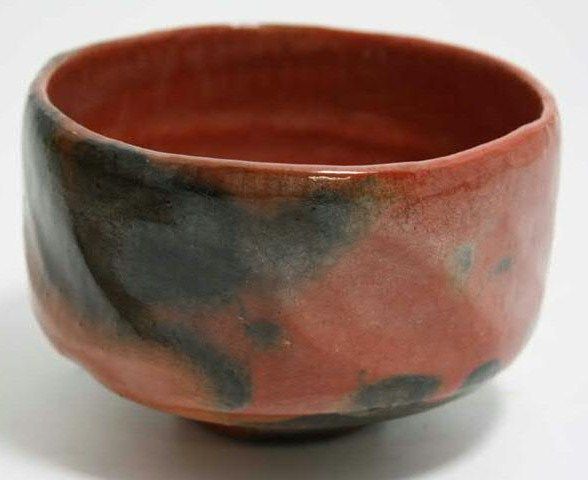


Bol à thé Raku avec sa boite signée, potier Sasaki Shoraku III (1944). Photo SARL Jack-Philippe Ruellan
D: 12 cm, H: 8cm - Estimation : 40/60€
SARL Jack-Philippe Ruellan. SAMEDI 18 FÉVRIER à 14H30. 8 rue du Dr J. Audic Z.A.C. du Ténénio - B.P. 37 56000 Vannes. Tél. : 02.97.47.26.32 - Fax : 02.97.47.91.82 - Email : ruellan.cpriseur@wanadoo.fr
Note: Sasaki Shoraku III, born in 1944, is one of Kyoto’s best known raku-yaki potters. The Shoraku kiln has been producing raku wares for three generations, and its bowls are widely used by practitioners of the tea ceremony across Japan. The founder of the Shoraku lineage established a kiln near the famous Kiyomizu temple in Eastern Kyoto. The kiln was moved to Kame-oka, near the Yada shrine in Kyoto, in 1945, as it is common to seek the patronage of a religious place in the raku tradition. It is then that the head priest of the Yada shrine gave Shoraku his name. The current Shoraku inherited that name from his father in 1962.
The red chawan are called: Hayafune (‘fast ship’), Kengyo (‘blind monk’), Kimamori (‘tree guardian’) and Rinzai.
Raku is a process that has been traditionally and primarily used to produce teabowls/chawan for the Japanese tea ceremony. It involves firing to a relatively low temperature and removing from the hot kiln to cool in cold water, resulting in a porous body and a crackling of the glaze. The body comprises of a high-temperature clay to which 25% grog (pulverised burned clay) has been added, which enables the body to withstand the sudden heat and cold shock


![Chawan [bol à thé] en grès émaillé, Japon, période Edo, XIXe siècle](https://image.canalblog.com/wHB51-PanIUKT_IVKS9oV2P3o2s=/400x260/smart/filters:no_upscale()/http%3A%2F%2Fstorage.canalblog.com%2F16%2F89%2F119589%2F123936761_o.jpg)
![Chawan [bol à thé] en grès émaillé, Japon, époque Edo, XIXE siècle](https://image.canalblog.com/BZUx8UMyKwxuxsrs2lXDwqBNvbA=/400x260/smart/filters:no_upscale()/http%3A%2F%2Fstorage.canalblog.com%2F71%2F96%2F119589%2F123936662_o.jpg)
![Chawan [bol à thé] en grès émaillé, Japon, Epoque Edo, XIXe siècle](https://image.canalblog.com/qAW2JEXX21A-em1Hm3-MNhAWz8I=/400x260/smart/filters:no_upscale()/http%3A%2F%2Fstorage.canalblog.com%2F91%2F46%2F119589%2F123936598_o.jpg)
![Chawan [bol à thé] en grès clair, Japon, époque Edo, XVIIIe-XIXe siècle, fours de Raku](https://image.canalblog.com/Nv9iJEljNSIb0jtqq-mBDcuypZA=/400x260/smart/filters:no_upscale()/http%3A%2F%2Fstorage.canalblog.com%2F19%2F71%2F119589%2F123936552_o.jpg)