

/https%3A%2F%2Fprofilepics.canalblog.com%2Fprofilepics%2F1%2F0%2F100183.jpg)
/https%3A%2F%2Fstorage.canalblog.com%2F03%2F02%2F119589%2F96711876_o.jpg)
/https%3A%2F%2Fstorage.canalblog.com%2F11%2F31%2F119589%2F94773502_o.jpg)
/https%3A%2F%2Fstorage.canalblog.com%2F20%2F83%2F119589%2F94772815_o.jpg)
/https%3A%2F%2Fstorage.canalblog.com%2F26%2F72%2F119589%2F75604929_o.jpg)
/https%3A%2F%2Fstorage.canalblog.com%2F59%2F60%2F119589%2F26458628_o.jpg)
"Richard Avedon: Photographies 1946-2004" @ Musée du Jeu de Paume, Paris
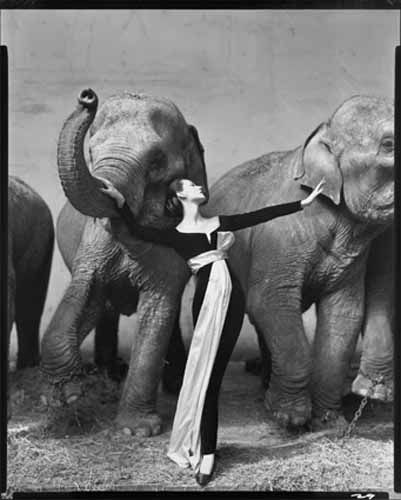
Richard Avedon, Dovima et les éléphants, 1955. Photographie, robe du soir de Dior, Cirque d'Hiver, Paris. (Courtesy Le Jeu de Paume. © 2008 the Richard Avedon Foundation)

Richard Avedon, Autoportrait, 20 août1980. Photographie, Provo, Utah. Courtesy Le Jeu de Paume. © 2008 the Richard Avedon Foundation.
C'est la première grande rétrospective organisée sur Richard Avedon, depuis son décès en 2004. Après le Louisiana Museum, du 24 août 2007 au 13 janvier 2008, et Forma, à Milan, du 14 février au 8 juin 2008, elle est présentée, cet été, au Jeu de Paume Concorde, dont elle occupe l’ensemble des espaces.
Cinquante ans durant, Avedon fut l’un des plus grands noms de la photographie de mode. L’exposition regroupe 270 œuvres retraçant l’ensemble de sa carrière de 1946 à 2004: des photographies de mode bien sûr, mais surtout des portraits de nombreuses célébrités du monde de la politique, de la littérature, de l’art et du spectacle.
Au Jeu de Paume, cette sélection est enrichie d’une quarantaine de tirages grand format de la série "In the American West", réalisée par Avedon de 1979 à 1984.
Un livre édité par le Louisiana Museum accompagne l’exposition (édition française).
Exposition organisée par le Louisiana Museum of Modern Art (Danemark), en collaboration avec la Richard Avedon Foundation (États-Unis).
Evénements
Conférence de Bernard Blistène: "Avedon"Vendredi 4 juillet à 19h à l'Auditorium Concorde.
Projection de "Richard Avedon: Darkness and Light"
Documentaire de Helen WhitneyTous les jours à 12h30, 14h, 15h30 et 17h, séances supplémentaires à 11h les samedis et dimanches, et à 18h30 le mardi (sauf le 8 juillet) à l'Auditorium Concorde

Sandra Bennett, 12 ans, Rocky Ford, Colorado, 23 août 1980. Photographie extraite de la série In the American West. Richard Avedon © 2008 the Richard Avedon Foundation.

Richard Avedon, Roberto Lopez, 28 septembre 1980. Photographie, ouvrier sur un gisement pétrolifère Lyons, Texas. Photographie extraite de la série In the American West. Courtesy Le Jeu de Paume. © 2008 the Richard Avedon Foundation.
PARIS.- This exhibition is the first major retrospective of the artist’s work since his death in 2004. After the Louisiana Museum (24 August 2007 to 13 January 2008), it is being presented this summer at the Jeu de Paume Concorde, where it will occupy the entire space.
The exhibition brings together 270 works spanning Richard Avedon’s career from 1946 to 2004. There are of course fashion photographs, but above all there are photographs of figures from the worlds of politics, literature, the arts and show business.
In Paris, at the initiative of Marta Gili, director of the Jeu de Paume, this selection will be enriched by some forty large-format prints from In the American West, the series produced by Avedon from 1979 to 1984.
Richard Avedon started working for Harper’s Bazaar in 1945. He joined Vogue in 1966. His pictures metamorphosed fashion photography, which he found too static and stuffy, by emphasising movement and capturing his models in public spaces such as parks nightclubs and shops. Avedon set out to recreate everyday and social situations, and to give the impression that, as in photojournalism, his photographs were taken spontaneously, on the spur of the moment.
After the Second World War the supremacy of New York meant that its fashion photographers were sent over to Paris to photograph the European collections. Avedon regularly photographed the designs of the major Parisian couture houses through to 1984.
In the 1960s Avedon went back to the studio and the neutral background in order highlight the beauty and mobility of his subjects.
In parallel to his fashion photographs, Richard Avedon made numerous portraits, radically transforming the codes of genre, as did that other great American photographer, Irving Penn.
But Avedon went even further than Penn. He shattered the iconic images of the stars of show business, literature, the arts and the political elite in the United States. His portraits show all the facets of his models’ personality, however great their mastery of the codes of representation. The use of white grounds, the bareness of the compositions, helped to bring a searching psychological dimension to each subject.
Generally speaking, Avedon sought to capture the true nature of things rather than to reproduce them superficially. During his photography sessions, he sought out that very special moment when he could capture and set down the psychological intensity emanating from the sitter. For, to photograph someone “meant looking beyond the charm of the face and establishing a relation between the vital presence of the other and his own, that is to say, finding the moment when everything converged and happened.”
“(…) In the American West was the result of a commission from the Amon Carter Museum of Fort Worth, in Texas. From 1979 to 1984, Avedon photographed men and women in the American West, most of them working folk. In the process, he travelled across several states of the Great Plains and the Rockies, paying special attention to specific sites and events such as ranches, coalmines, cattle fairs, oil wells, slaughterhouses, truck stops, modest diners and offices. He photographed the homeless, housewives, cowboys, miners, prisoners and rodeo riders. His strategy was to build up a network of portraits, weaving a series of psychological, sociological, physical and familial connections between these individuals who had never met. All the photos in this series were taken in broad daylight and outdoors, looking for a certain quality of shadow, against a simple white paper backdrop hung on the side of a truck.
The uncompromising photographs that resulted caused quite a controversy when they were first shown in Texas because of Avedon’s “demystifying” vision of that Promised Land, the American West, that land of pioneers and conquerors.” (Marta Gili, from the preface to the catalogue)
Richard Avedon put his talent as a photographer at the service of the social causes and political evens that shook American society in the 1960s and 70s. He made several reports on the Civil Rights movements in the South (1963), the Ku Klux Klan, and psychiatric hospitals.
A pacifist, he photographed hippies demonstrating against the Vietnam War in 1969, and travelled to the country in 1971 to make portraits of the army leaders and of napalm victims.
For the French magazine Égoïste he covered the meeting of East and West Berliners at the Brandenburg Gates on 31 December 1989 and 1 January 1990, less than two months after the fall of the Wall.
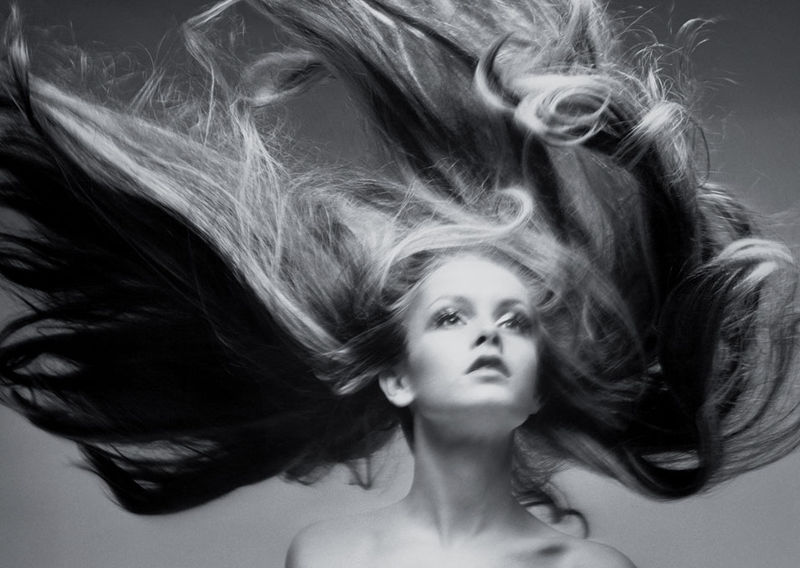
Twiggy, coiffure de Ara Gallant studio de Paris, janvier 1968. Photographie Richard Avedon. © 2008 the Richard Avedon Foundation.


/image%2F1371349%2F20260911%2Fob_d60350_35871.jpg)
/image%2F1371349%2F20260912%2Fob_c79f20_36015.jpg)
/image%2F1371349%2F20260912%2Fob_c7807c_36008.jpg)
/image%2F1371349%2F20260912%2Fob_c1ba4d_35985.jpg)