

/https%3A%2F%2Fprofilepics.canalblog.com%2Fprofilepics%2F1%2F0%2F100183.jpg)
/https%3A%2F%2Fstorage.canalblog.com%2F03%2F02%2F119589%2F96711876_o.jpg)
/https%3A%2F%2Fstorage.canalblog.com%2F11%2F31%2F119589%2F94773502_o.jpg)
/https%3A%2F%2Fstorage.canalblog.com%2F20%2F83%2F119589%2F94772815_o.jpg)
/https%3A%2F%2Fstorage.canalblog.com%2F26%2F72%2F119589%2F75604929_o.jpg)
/https%3A%2F%2Fstorage.canalblog.com%2F59%2F60%2F119589%2F26458628_o.jpg)
Ancient Greek beliefs about the afterlife are explored in major exhibition at the Getty Villa

Funerary Vessel with an Underworld Scene (detail, pre-conservation), South Italian, made in Apulia, 360–340 BC; found in Altamura, Italy, in 1847, terracotta. Red-figure volute kraterattributed to the Circle of the Lycurgus Painter. National Archaeological Museum of Naples, 81666.
LOS ANGELES, CA.- What did ancient Greeks believe would happen to them after they died? For most, the Underworld was bleak and somber, characterized by the absence of life’s pleasures, leading many individuals to seek ways to secure a more blessed afterlife. Organized around a monumental funerary vessel (krater) from Altamura, on loan from the National Archaeological Museum in Naples and recently conserved by the J. Paul Getty Museum’s Antiquities Conservation department, Underworld: Imagining the Afterlife explores depictions of the Underworld in the art of ancient Greece and southern Italy. The exhibition will be on view at the Getty Villa from October 31, 2018, through March 18, 2019.
“Some of the richest evidence for ancient beliefs about the afterlife comes from southern Italy in the fourth century BC, and the magnificent Altamura krater exemplifies the monumental, elaborately decorated vases that were produced at that time,” said Getty Museum Director Timothy Potts. “This important exhibition is the culmination of a two-year conservation project with the Museo Archeologico Nazionale in Naples (MANN) to conserve and display this krater. Our continued partnership with MANN has resulted in several successful collaborative projects including three of their splendid bronze treasures, the Ephebe (Youth) in 2009, the Apollo Saettante in 2011, and the over-life-size sculpture of Tiberius in 2013.”

Funerary Vessel with Dionysos in the Underworld (detail), South Italian, made in Apulia, 350–325 BC, terracotta. Red-figure volute krater attributed to the Darius Painter. Toledo Museum of Art. Gift of Edward Drummond Libbey, Florence Scott Libbey, and the Egypt Exploration Society, by exchange, 1994.19.
A centerpiece of the exhibition, the krater was made around the middle of the fourth century B.C, and was found in fragments in 1847 in Altamura in the region of Apulia, southeast Italy. The ancient inhabitants of that region buried their dead with assemblages of pottery and other goods, and large vessels were produced for graves of the local elite. Though not Greek themselves, Apulians engaged closely with the culture of Greece, and many of their funerary vases are decorated with scenes from Greek myth and drama. The krater from Altamura depicts the Underworld populated with more than 20 mythological figures including Hades and Persephone, the god and goddess of the Underworld, the musician Orpheus, the hero Herakles, the messenger god Hermes, and Sisyphus, who was eternally punished by having to roll a giant boulder up a hill.
The display of the krater in this exhibition follows two years of conservation treatment at the Getty Villa. After its discovery in 1847, the krater was substantially overpainted when it was reassembled in the workshop of the Neapolitan restorer Raffaele Gargiulo (1785–after 1870) in the early 1850s. By 2016, many of the old repairs needed treatment. In collaboration with colleagues in Naples, Getty conservators have worked to ensure the vase’s structural soundness and future stability. In the process, they were able to identify which areas had been re-created in the nineteenth century, and the results are presented in the exhibition.
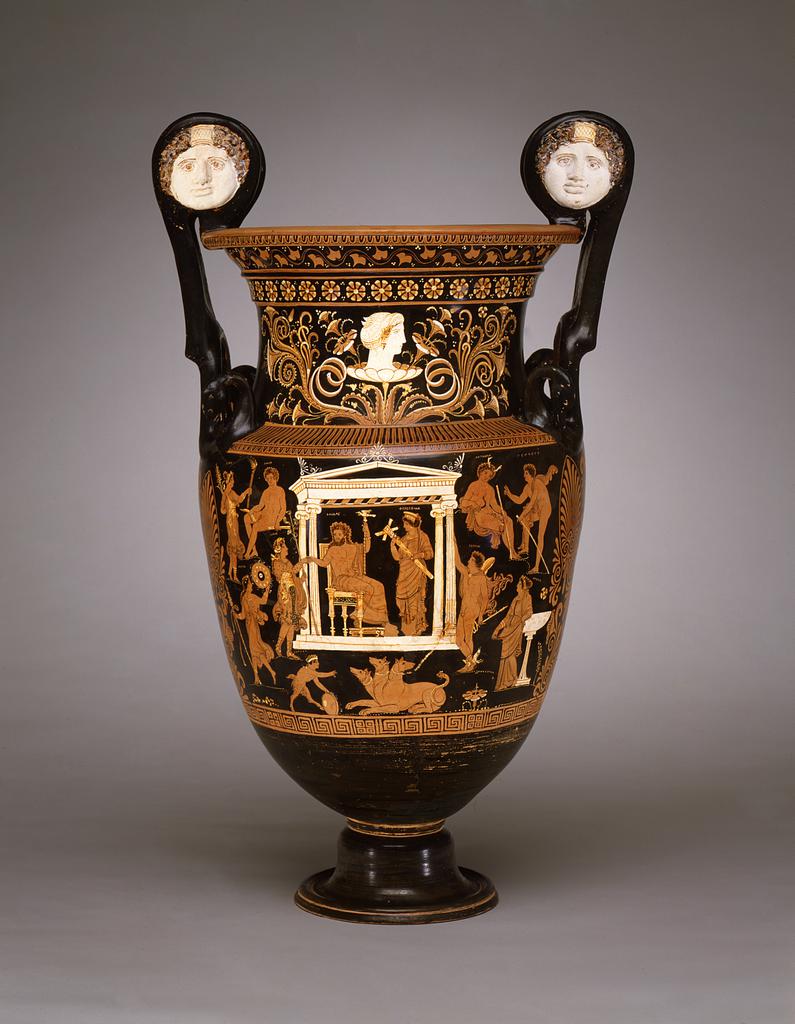
Funerary Vessel with Dionysos in the Underworld, South Italian, made in Apulia, 350–325 BC, terracotta. Red figure volute krater attributed to the Darius Painter. Toledo Museum of Art. Gift of Edward Drummond Libbey, Florence Scott Libbey, and the Egypt Exploration Society, by exchange, 1994.19.
The Underworld–otherwise known as “the House of Hades” or simply “Hades”–is a rare subject in Greek art. Athenian vase-painters of the sixth century BC typically focused on individual sinners such as Sisyphus, and it is only in South Italian vase-painting from around 350 BC that a tradition of richly populated Underworld scenes developed. About forty Apulian funerary vessels in mostly European collections, including the krater from Altamura, bear detailed representations of the afterlife and the mythological figures associated with it.
“Around thirty-five other ancient works have been chosen to highlight the famous inhabitants of Hades and to explore the ways in which individuals sought to achieve a happier afterlife,” said David Saunders, curator of the exhibition and associate curator of Antiquities at the J. Paul Getty Museum. “Monumental funerary vessels, such as the krater from Altamura, are painted with elaborate depictions of Hades’s realm, and rare gold plaques that were buried with the dead bear directions for where to go in the Underworld. These works, alongside funerary offerings, grave monuments, and representations of everlasting banquets, convey some of the ways in which the hereafter was imagined in the fifth and fourth centuries BC.”

Funerary Vessel with an Underworld Scene (body) and a Battle between Greeks and Amazons (neck) (detail, pre-conservation), South Italian, made in Apulia, 360–340 BC; found in Altamura, Italy, in 1847, terracotta. Red-figure volute krater attributed to the Circle of the Lycurgus Painter. National Archaeological Museum of Naples, 81666.
Most ancient Greeks anticipated that the soul left the body after death and continued to exist in some form, but an expectation that good would be rewarded and evil punished in the afterlife was not central to their beliefs. Perpetual torment awaited only the most exceptional sinners, while just a select few—heroes related to the Olympian gods—enjoyed an eternal paradise. Yet as this exhibition explores, individuals did seek ways to improve their lot.
Initiation in the Eleusinian Mysteries, an annual festival in Greece based on the story of Persephone, ensured participants a good harvest and also a blessed afterlife. Outside of mainstream religious practice, devotion to the mythical singer Orpheus and the god Dionysos also offered paths to a better existence after death. The rites were shrouded in secrecy and remain little understood today, but one of the most intriguing sources of information are the so-called Orphic tablets. Named by modern scholars after the mythical poet Orpheus, whose descent and return from the Underworld made him one of the few who could impart knowledge of the afterlife, the Orphic tablets are Greek inscriptions written on thin sheets of gold. They were deposited in graves, and usually bear a short text proclaiming the deceased’s distinguished status and providing guidance for his or her journey into the Underworld. Three examples are on view in the exhibition, including one in the Getty’s collection.
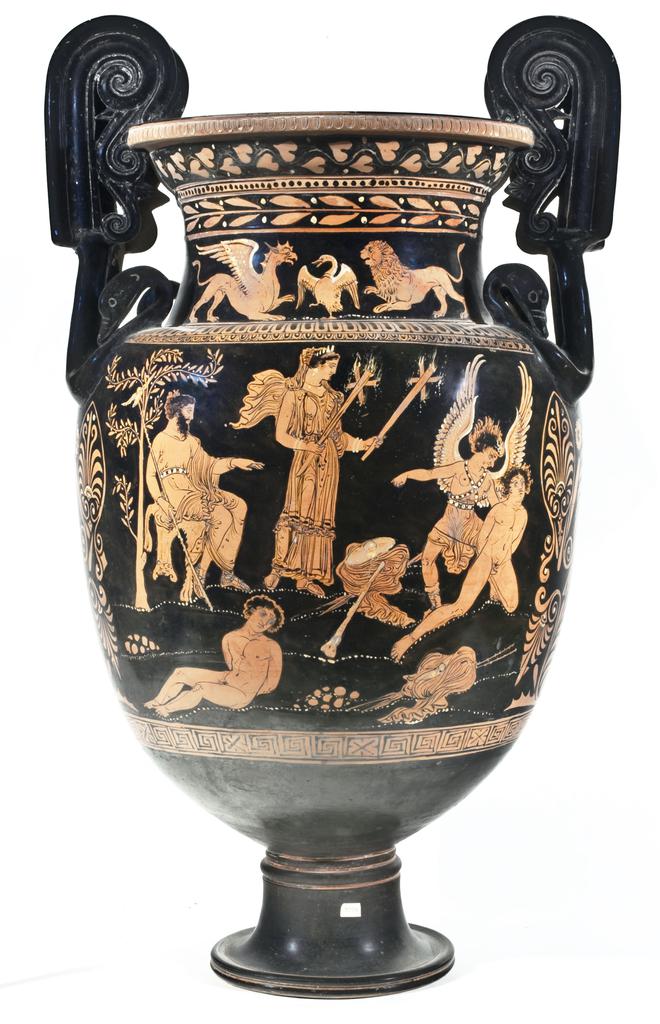
Mixing Vessel with Hades and Persephone Watching a Fury Bind Theseus and Perithoös, South Italian, made in Apulia, 365–350 BC, terracotta. Red-figure volute krater attributed to the Suckling-Salting Group. Museo Archeologico Nazionale “G. Jatta,” Ruvo, 1094.
The Greek philosopher Plato (about 428-347 BC) observed wryly that individuals “dismiss the stories told about what goes on in Hades” until they face death themselves. This exhibition examines some of the competing ideas and beliefs about the afterlife, and different strategies for ensuring everlasting happiness.
Underworld: Imagining the Afterlife is curated by David Saunders, associate curator of antiquities at the J. Paul Getty Museum. The exhibition is organized in collaboration with the National Archaeological Museum in Naples – Laboratory of Conservation and Restoration.
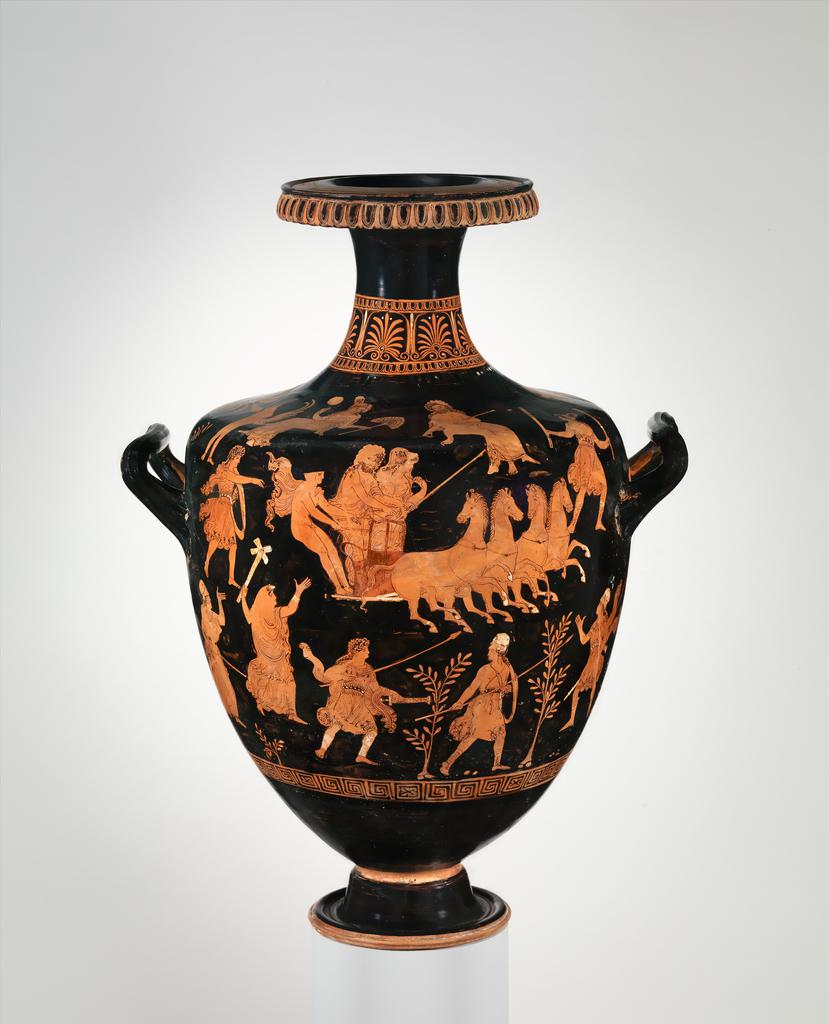
Funerary Vessel with the Abduction of Persephone, South Italian, made in Apulia, 340–330 BC, terracotta. Red-figure kalpis attributed to the Group of B.M.F. 308. The Metropolitan Museum of Art, New York. Gift of Miss Matilda W. Bruce, 1907, 07.128.1. Image: www.metmuseum.org

Storage Jar with Sisyphus and the Uninitiated, Greek, made in Athens, about 525 BC; found in Vulci, Italy, terracotta. Black-figure neck amphora attributed to the Bucci Painter. State Collections of Antiquities and Glyptothek Munich, SH 1493 WAF. Photograph by Renate Kűhling.

Storage Jar with Athena, Herakles, and Kerberos (detail), Greek, made in Athens, 530–510 BC; found in Vulci, Italy, terracotta. Bilingual amphora attributed to the Andokides Painter. Musée du Louvre, Départment des Antiquités grecques, étrusques et romaines, Paris, F204. Image © RMN-Grand Palais / Art Resource, NY. Photo: Hervé Lewandowski.

Fragment of a Funerary Relief with Underworld Figures, Greek, made in South Italy (Taras), 325–300 BC, limestone. State Collections of Antiquities and Glyptothek Munich, GL 494. Photograph by Renate Kühling.
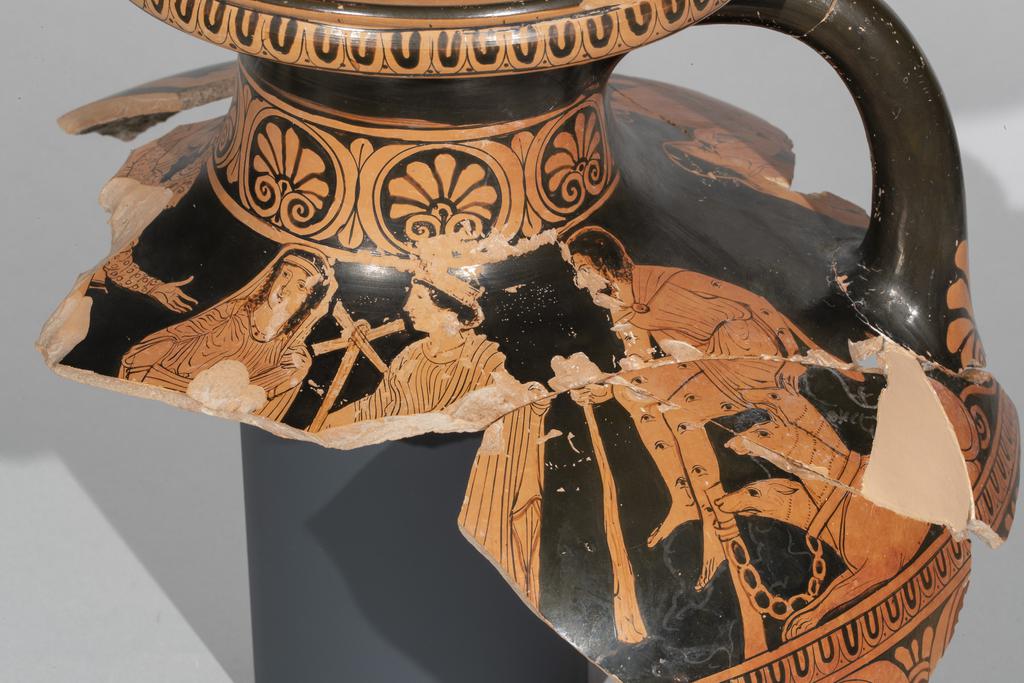
Fragment of a Water Jar with Orpheus Losing Eurydike in the Underworld (detail), South Italian, made in Lucania, 410–390 BC; found at the Spring Sanctuary in Saturo, near Taranto, Italy, in 1977, terracotta. Lucanian red-figure kalpis attributed to the Palermo Painter. Museo Archeologico Nazionale, Taranto, 187109. By concession of the National Archaeological Museum of Taranto. Further duplication or reproduction is prohibited.
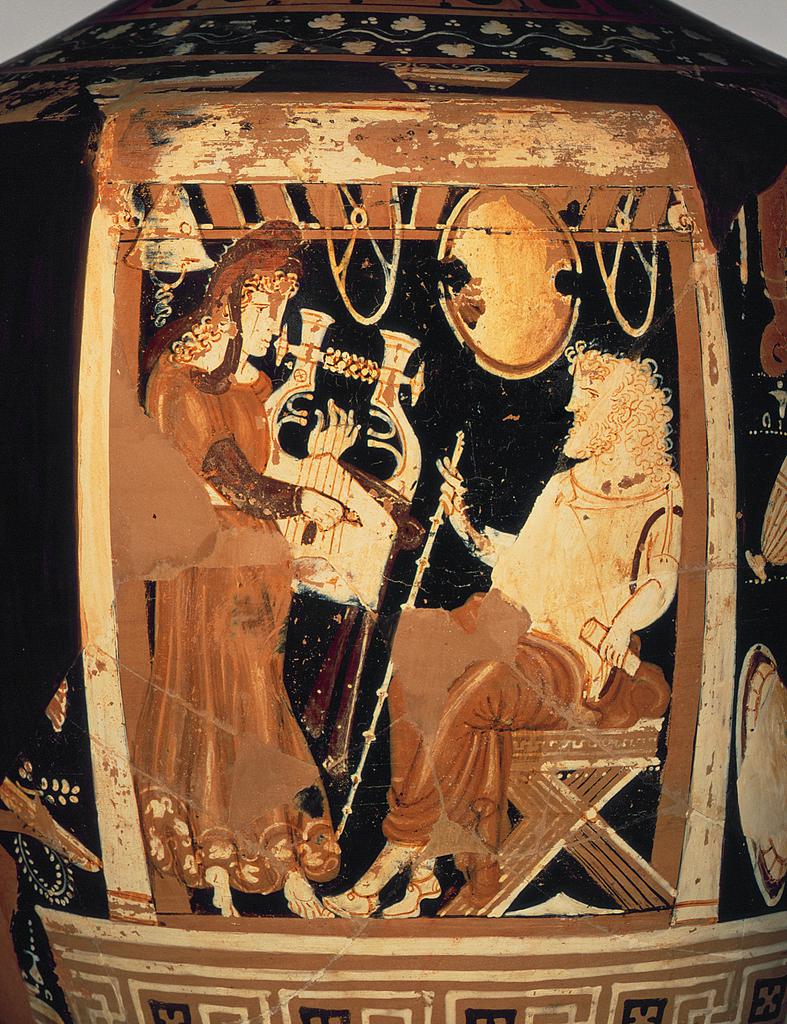
Funerary Vessel with Orpheus Playing His Lyre before the Deceased (detail), South Italian, made in Apulia, 340–320 BC, terracotta. Red-figure amphora attributed to the Ganymede Painter. Ludwig Collection – Loan of Peter and Irene Ludwig Foundation, Lu S 40. Image © Antikenmuseum Basel und Sammlung Ludwig.
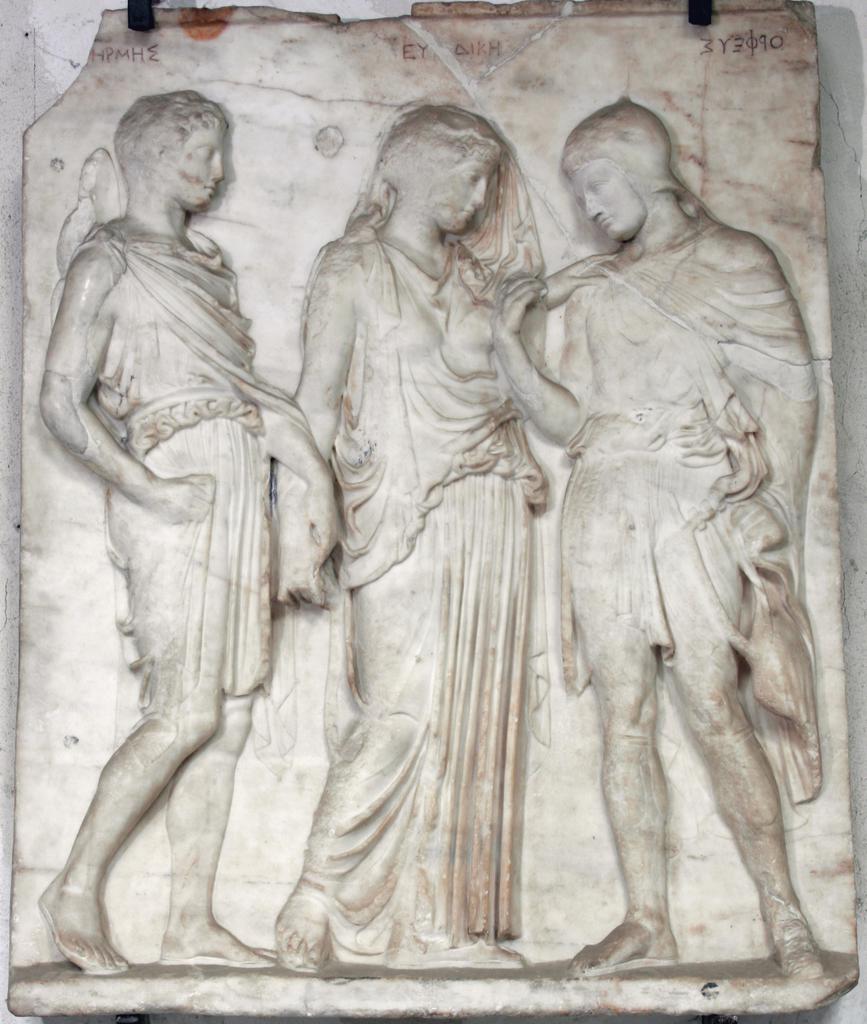
Relief with Hermes, Eurydike, and Orpheus, Roman, 100 BC–AD 100; found in Torre del Greco, Italy, around 1640, marble. National Archaeological Museum of Naples, 6727.

Man Reclining on a Centaur, Greek, made in South Italy (Taras), about 350 BC; found in Contrada Santa Lucia, Taranto, Italy, terracotta. Museo Archeologico Nazionale, Taranto, 453. By concession of the National Archaeological Museum of Taranto. Further duplication or reproduction is prohibited.
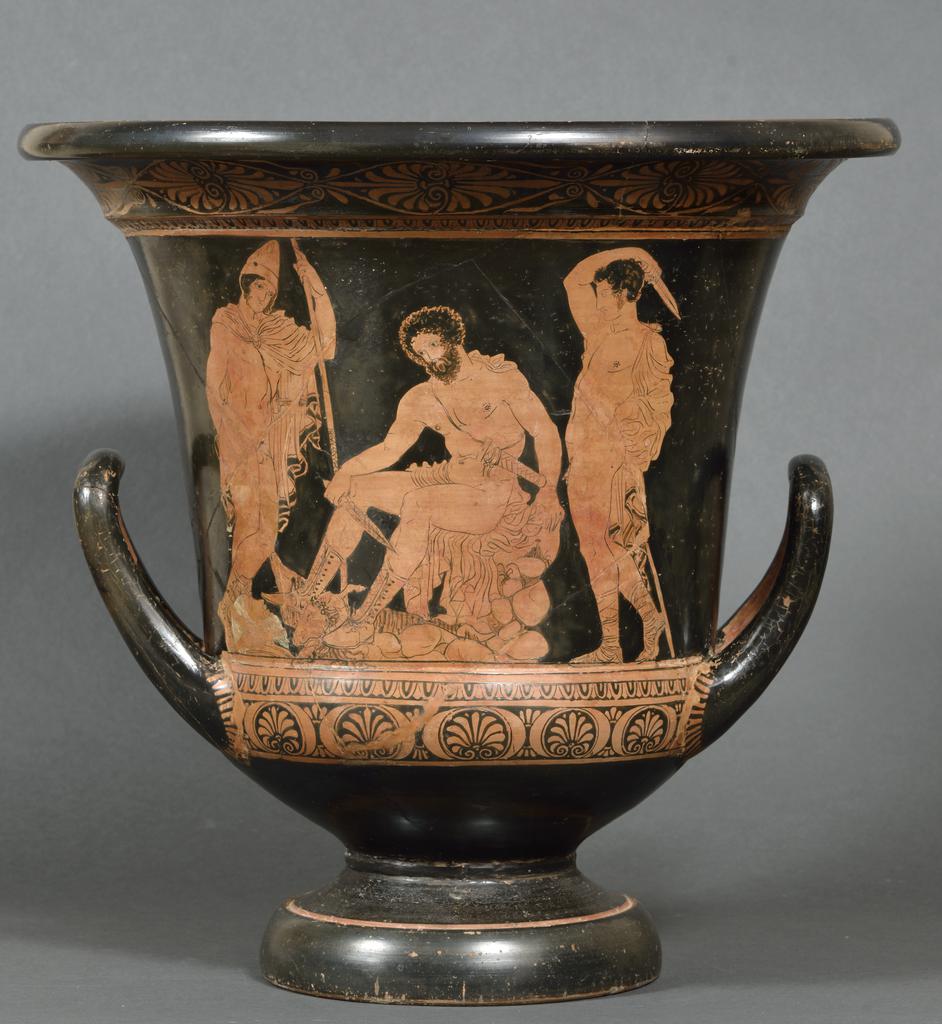
Mixing Vessel with Odysseus Summoning the Shades from the Underworld, South Italian, made in Lucania, 390–380 BC; found in Pisticci, Italy, terracotta. Red-figure calyx krater attributed to the Dolon Painter. Bibliothèque nationale de France, Paris, 422.

Mixing Vessel with Odysseus Summoning the Shades from the Underworld (detail), South Italian, made in Lucania, 390–380 BC; found in Pisticci, Italy, terracotta. Red-figure calyx krater attributed to the Dolon Painter. Bibliothèque nationale de France, Paris, 422.

Seated Musician, Greek, made in South Italy (Taras), 330–300 BC, terracotta with traces of pigment. The J. Paul Getty Musem.
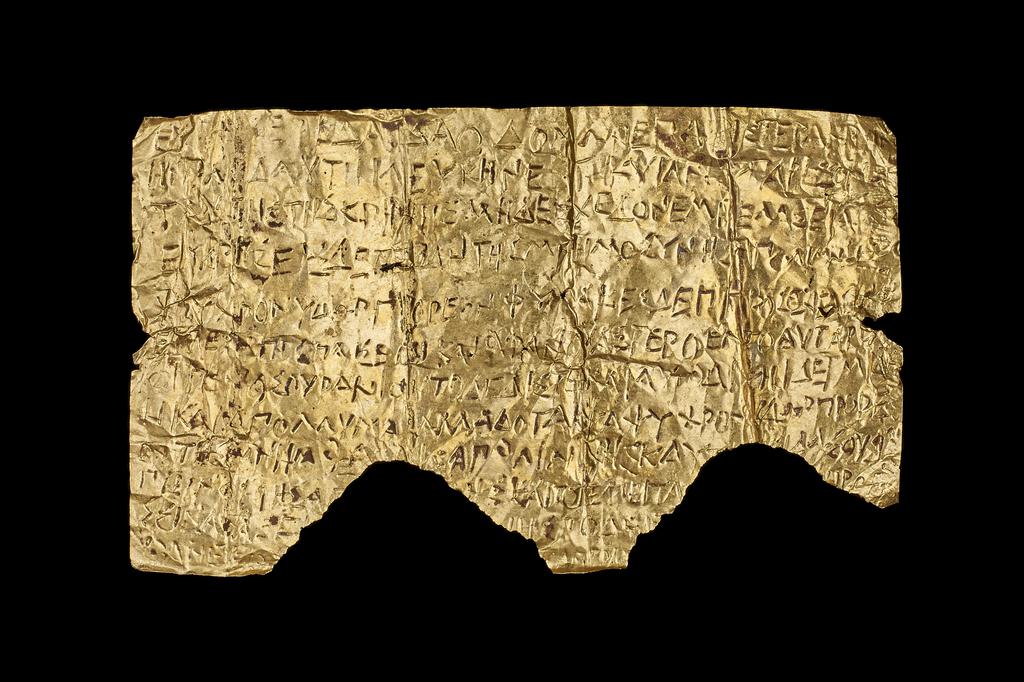
Tablet with Instructions for the Deceased in the Underworld and a Case on a Chain, South Italian, 200–100 BC (tablet); Roman, AD 100–200 (chain and case), gold. Reportedly found in Petelia (present-day Strongoli, Italy). Trustees at the British Museum, London, GR 1843, 0724.3.
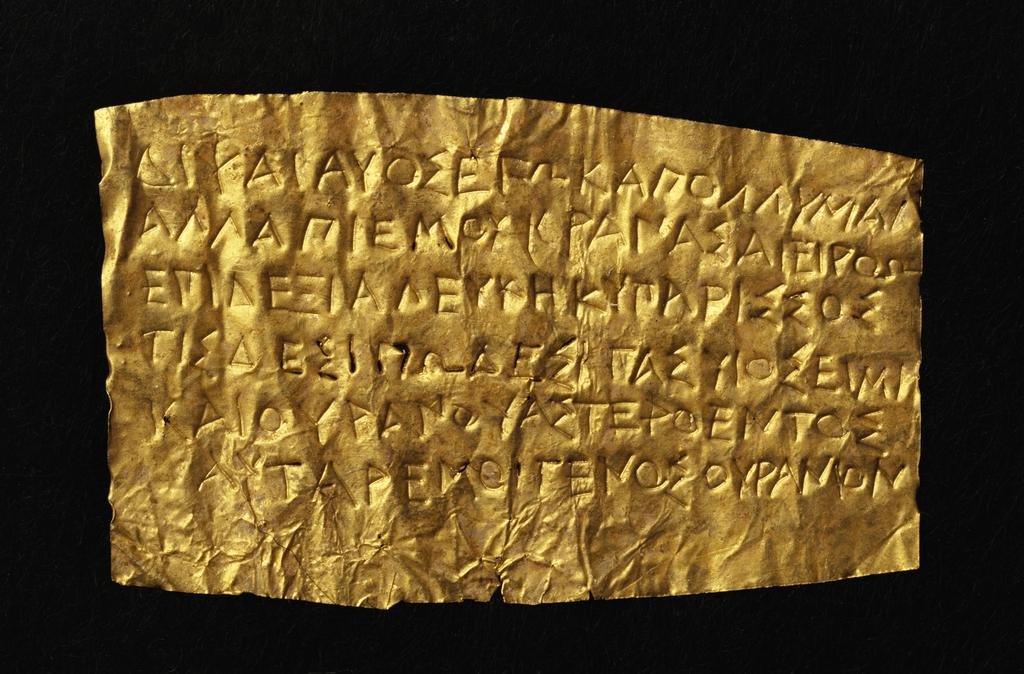
Tablet with Instructions for the Deceased in the Underworld, Greek, 350–300 BC, gold. The J. Paul Getty Museum. Gift of Lenore Barozzi.
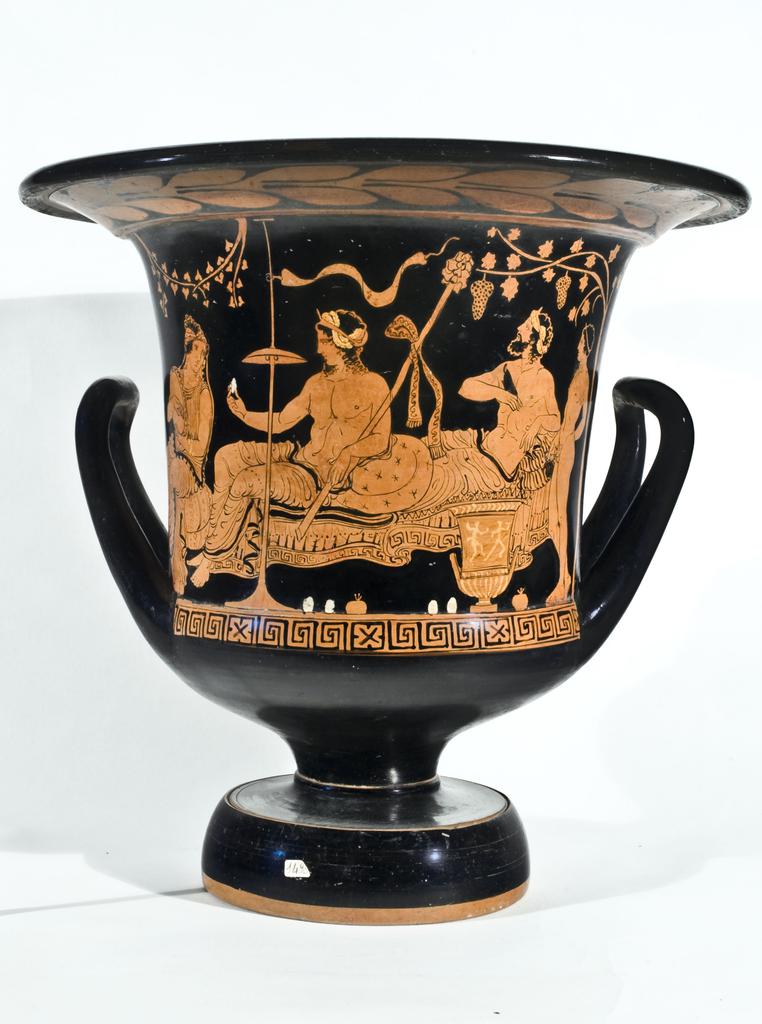
Mixing Vessel with Symposiasts, South Italian, made in Apulia, 390–370 BC, terracotta. Red-figure calyx kraterattributed to the Tarporley Painter. Museo Archeologico Nazionale “G. Jatta,” Ruvo, 1495.
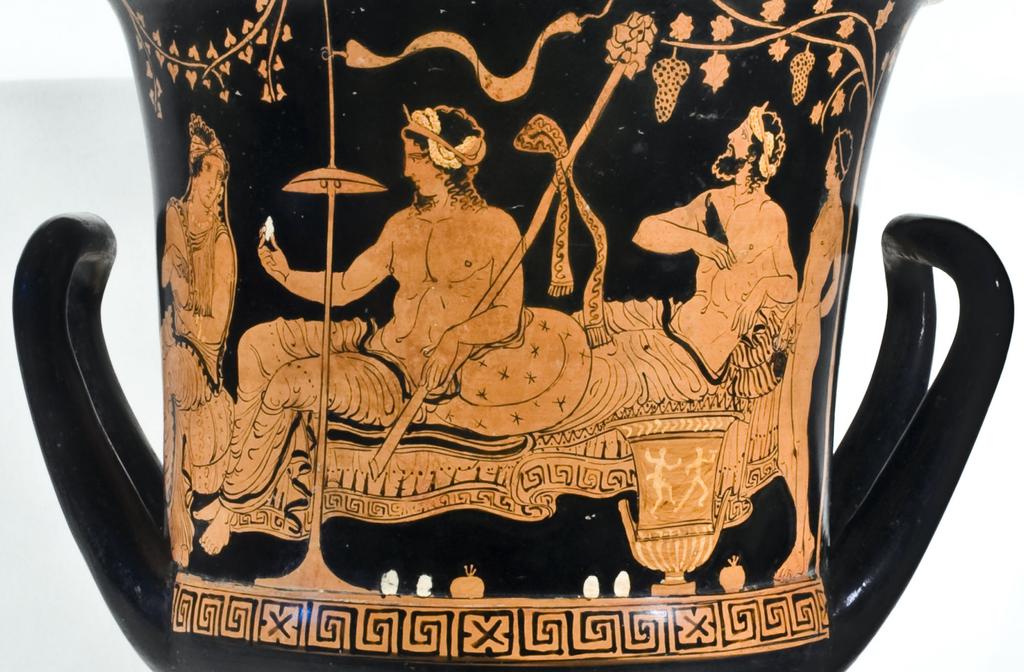
Mixing Vessel with Symposiasts (detail), South Italian, made in Apulia, 390–370 BC, terracotta. Red-figure calyx krater attributed to the Tarporley Painter. Museo Archeologico Nazionale “G. Jatta,” Ruvo, 1495.
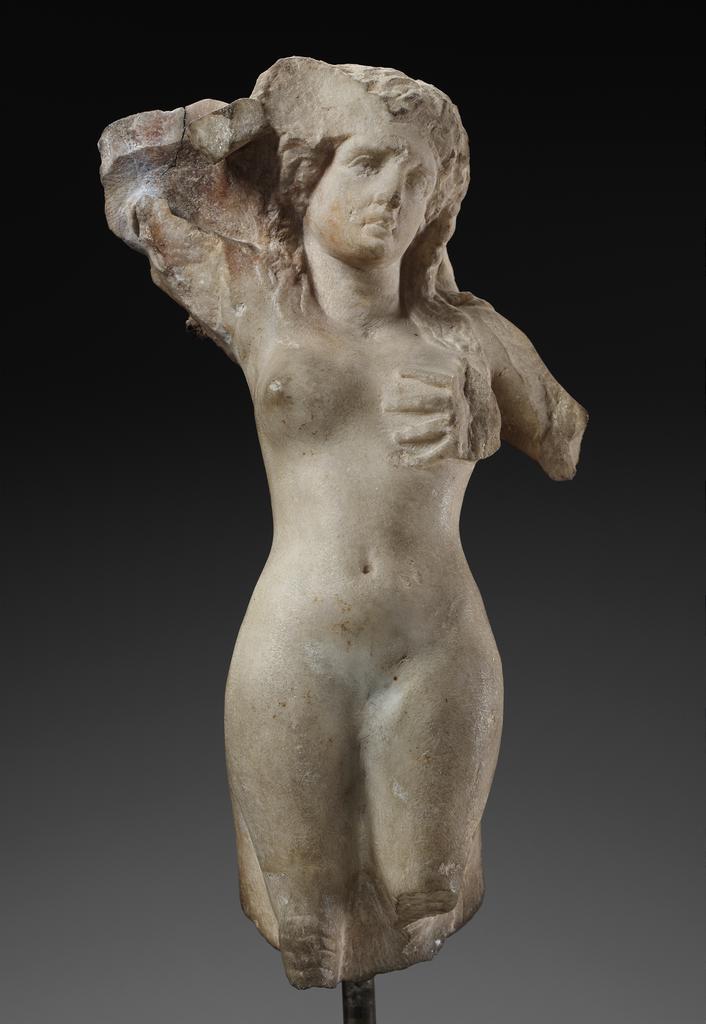
Weeping Siren, Greek, made in Athens, about 350–325 BC, marble. Museum of Fine Arts, Boston. Francis Bartlett Donation of 1900, 03.757. Photograph © 2018 Museum of Fine Arts, Boston0


/image%2F1371349%2F20260925%2Fob_aeecf2_38556.jpg)
/image%2F1371349%2F20260925%2Fob_e8b711_38551.jpg)
/image%2F1371349%2F20260925%2Fob_f64f72_38550.jpg)
/image%2F1371349%2F20260925%2Fob_597eb0_38549.jpg)