

/https%3A%2F%2Fprofilepics.canalblog.com%2Fprofilepics%2F1%2F0%2F100183.jpg)
/https%3A%2F%2Fstorage.canalblog.com%2F03%2F02%2F119589%2F96711876_o.jpg)
/https%3A%2F%2Fstorage.canalblog.com%2F11%2F31%2F119589%2F94773502_o.jpg)
/https%3A%2F%2Fstorage.canalblog.com%2F20%2F83%2F119589%2F94772815_o.jpg)
/https%3A%2F%2Fstorage.canalblog.com%2F26%2F72%2F119589%2F75604929_o.jpg)
/https%3A%2F%2Fstorage.canalblog.com%2F59%2F60%2F119589%2F26458628_o.jpg)
Robert H. Ellsworth's Fifth Avenue apartment
“Never collect anything that you don’t want to live with every day.” Robert H. Ellsworth
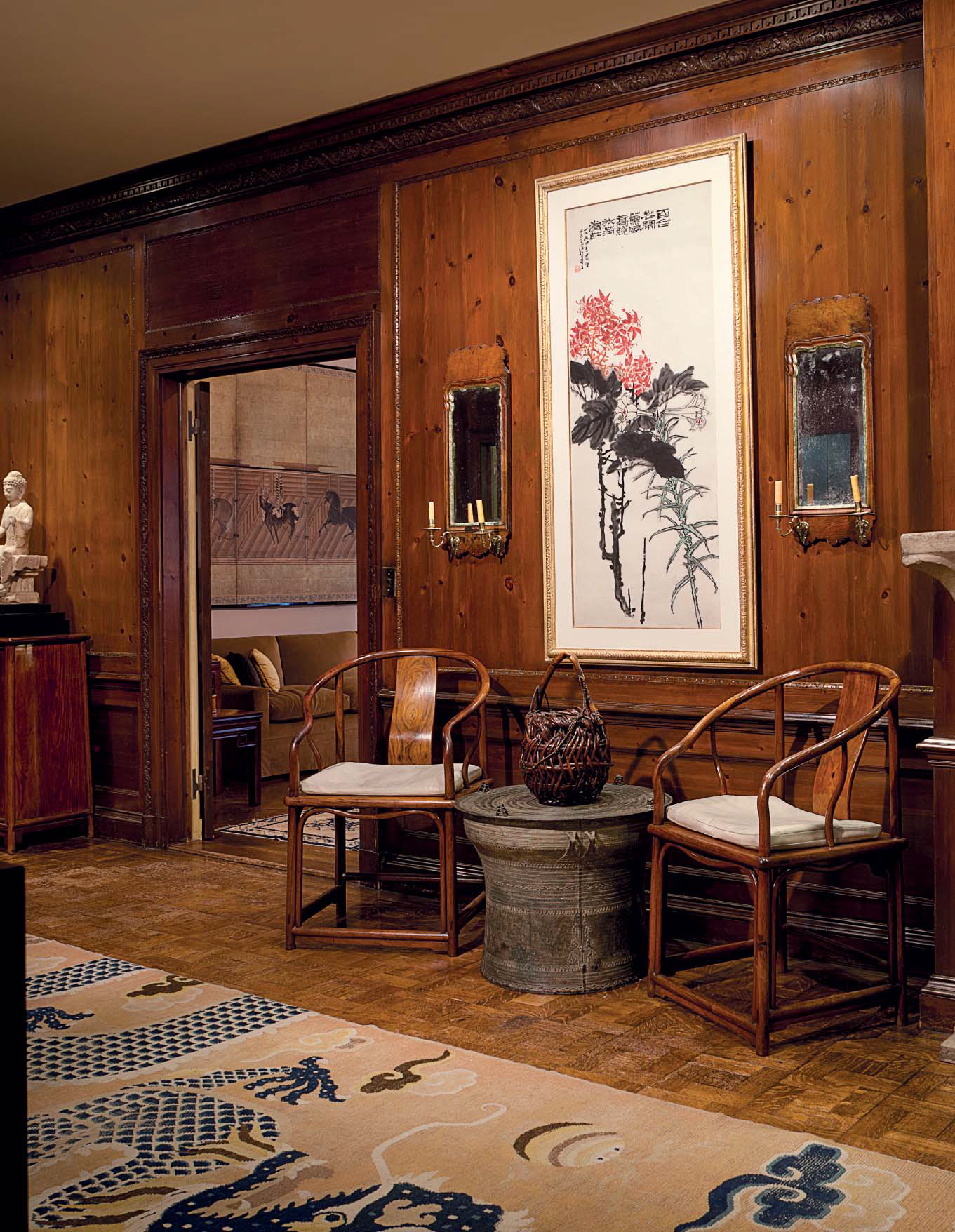


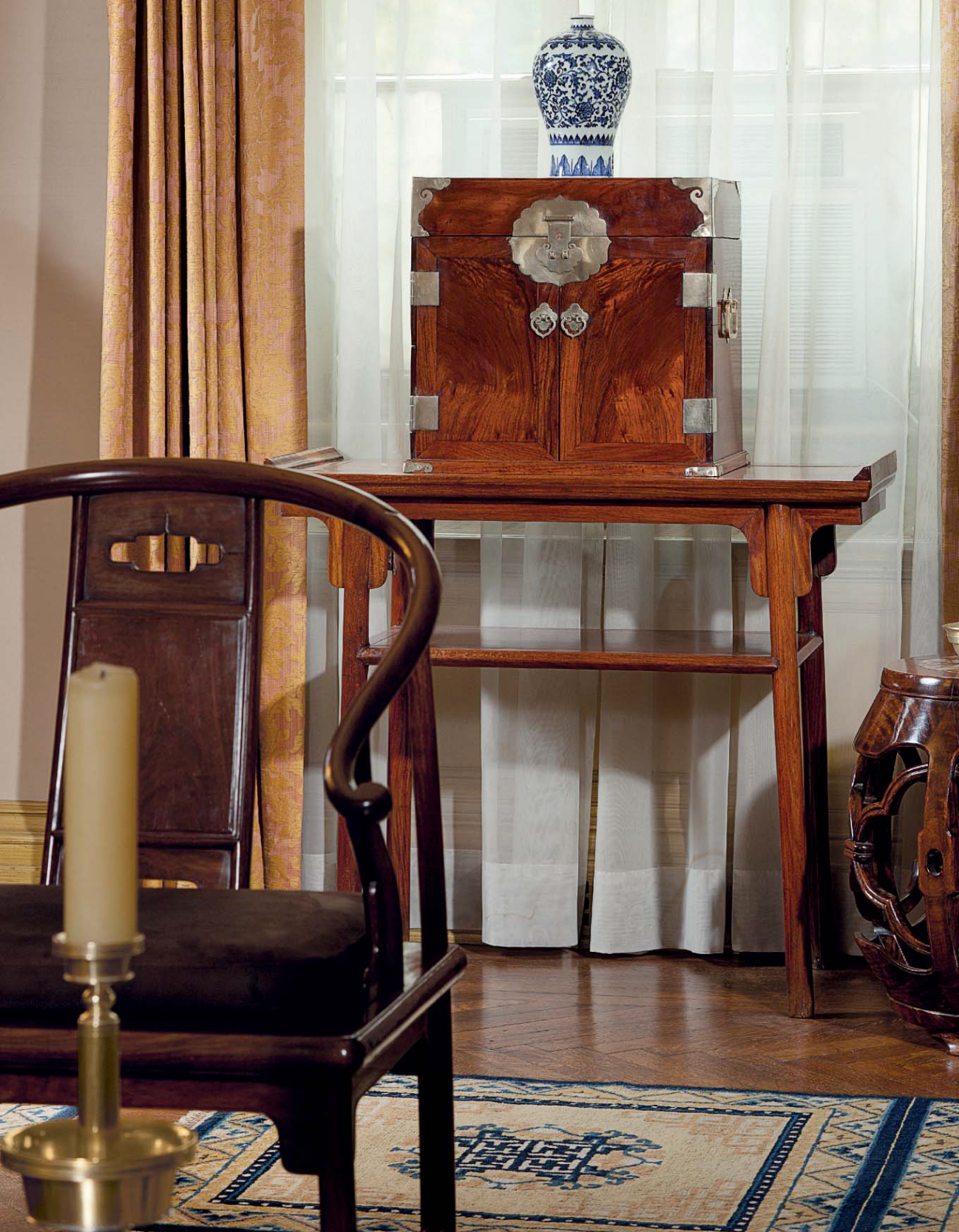


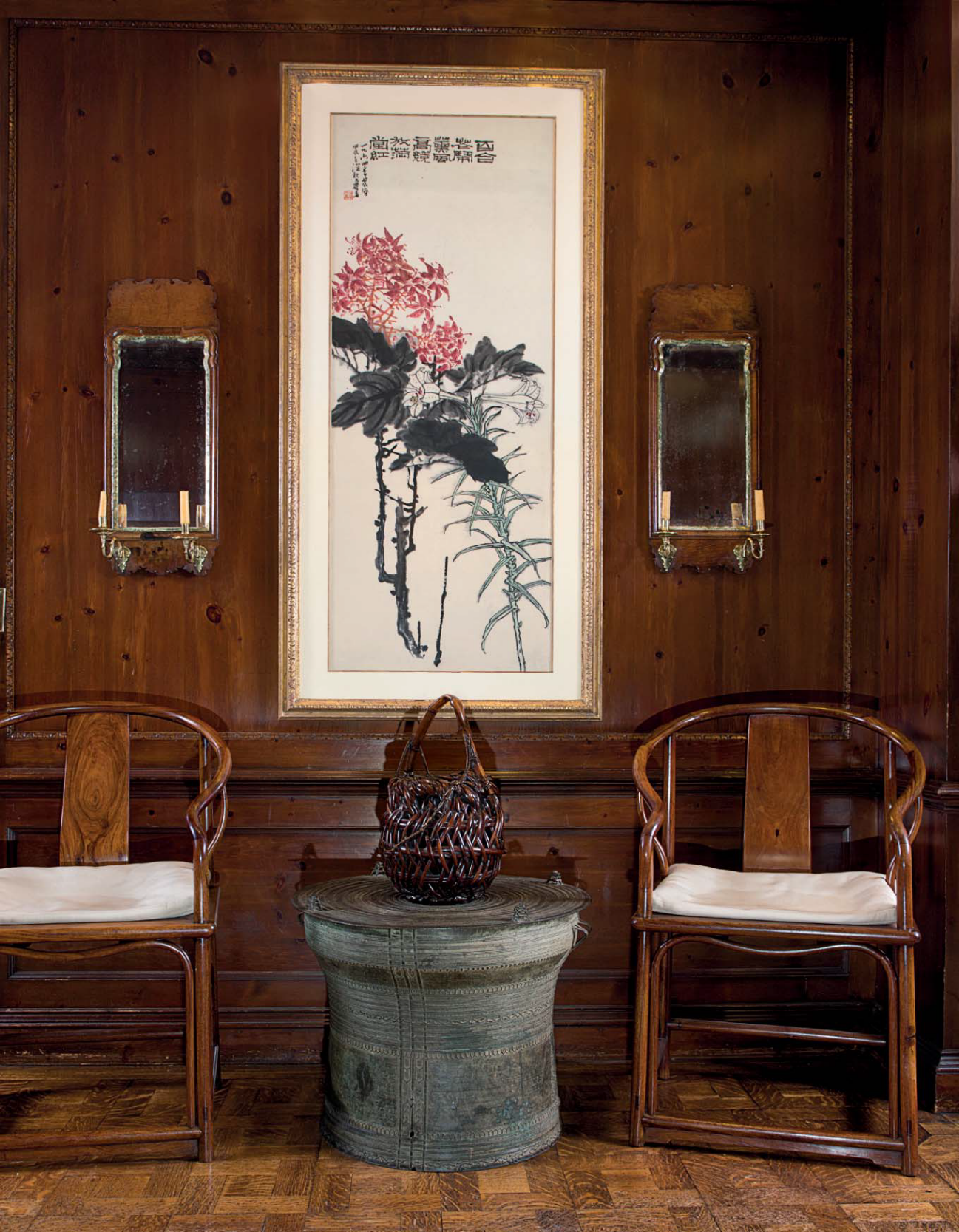
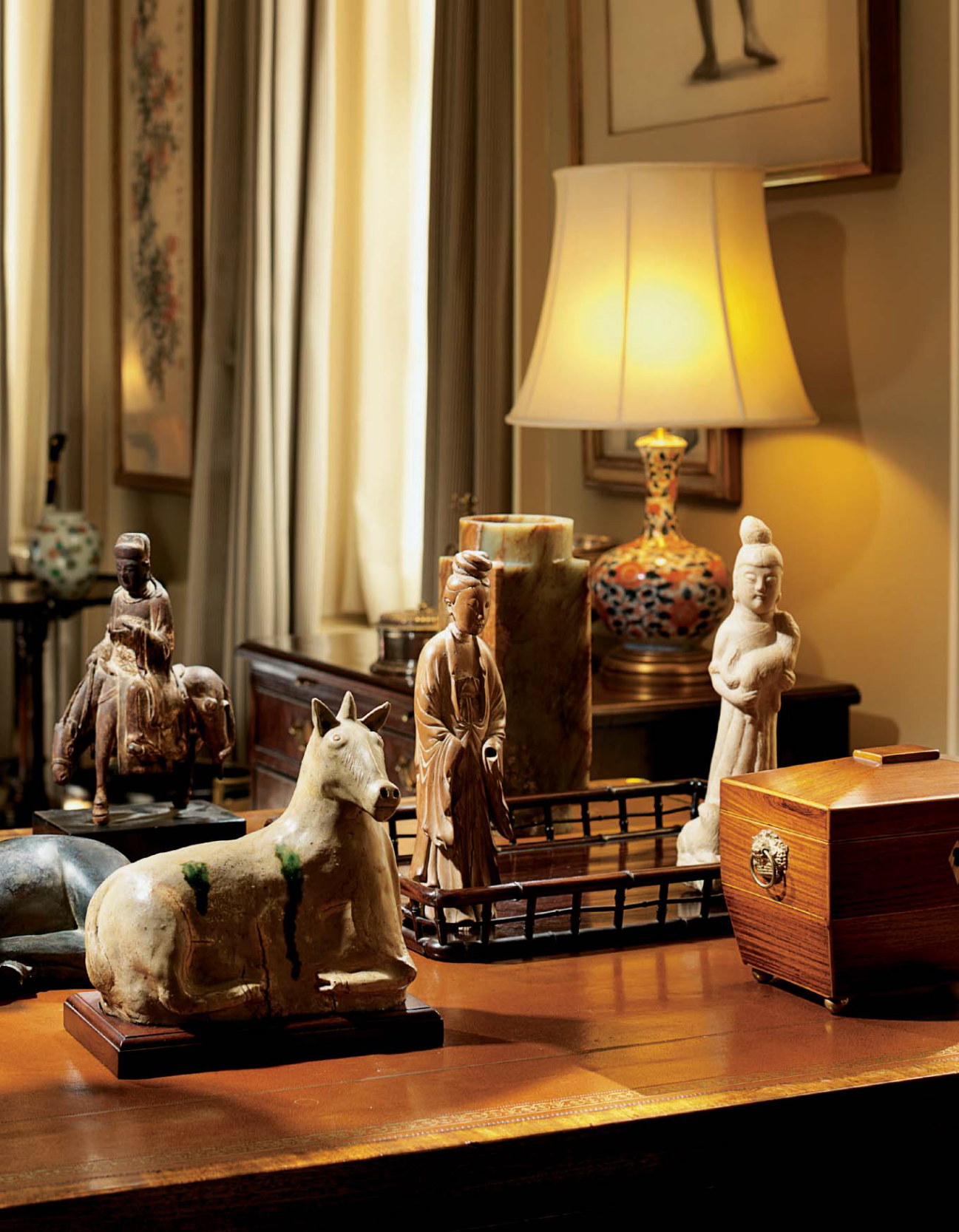


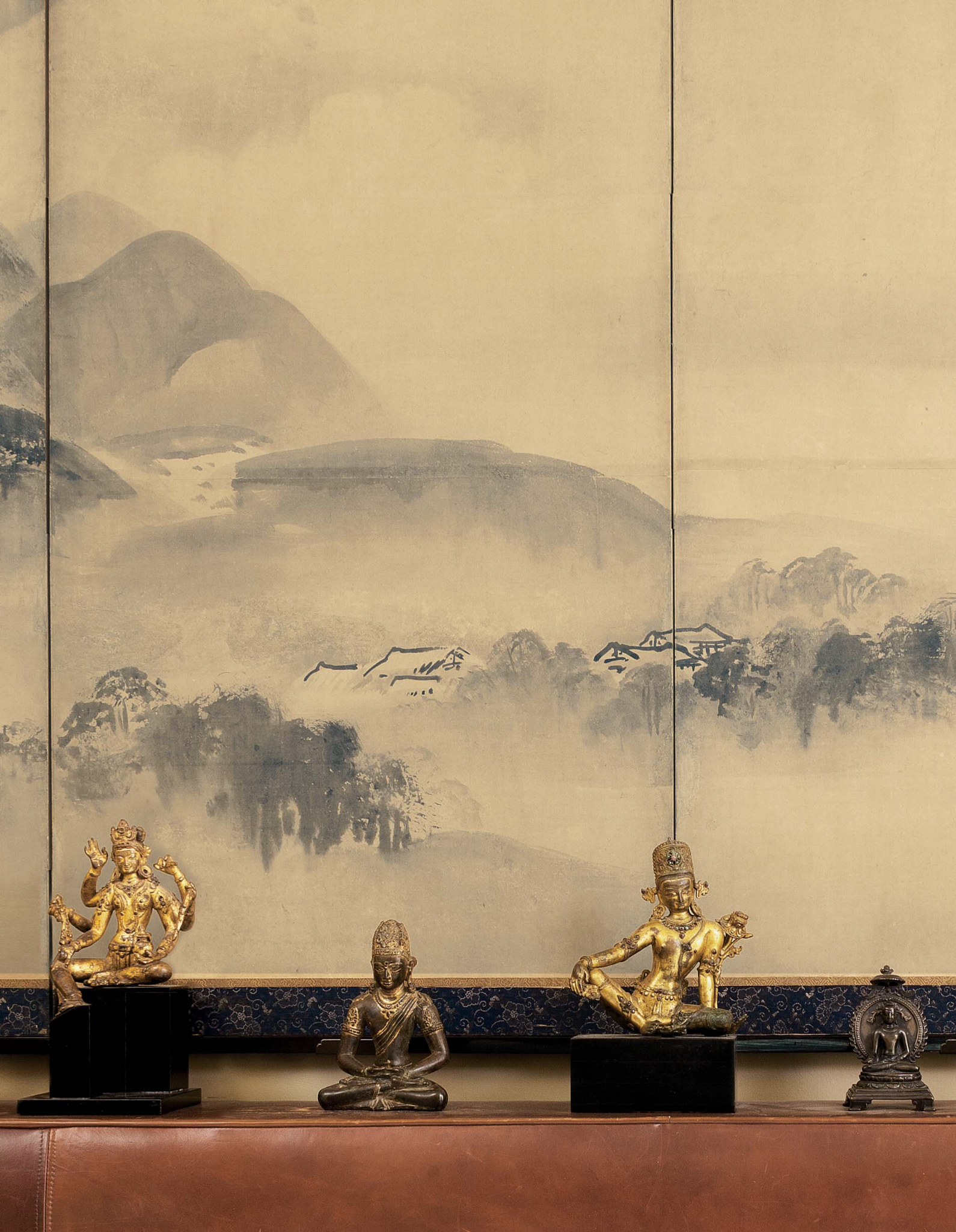


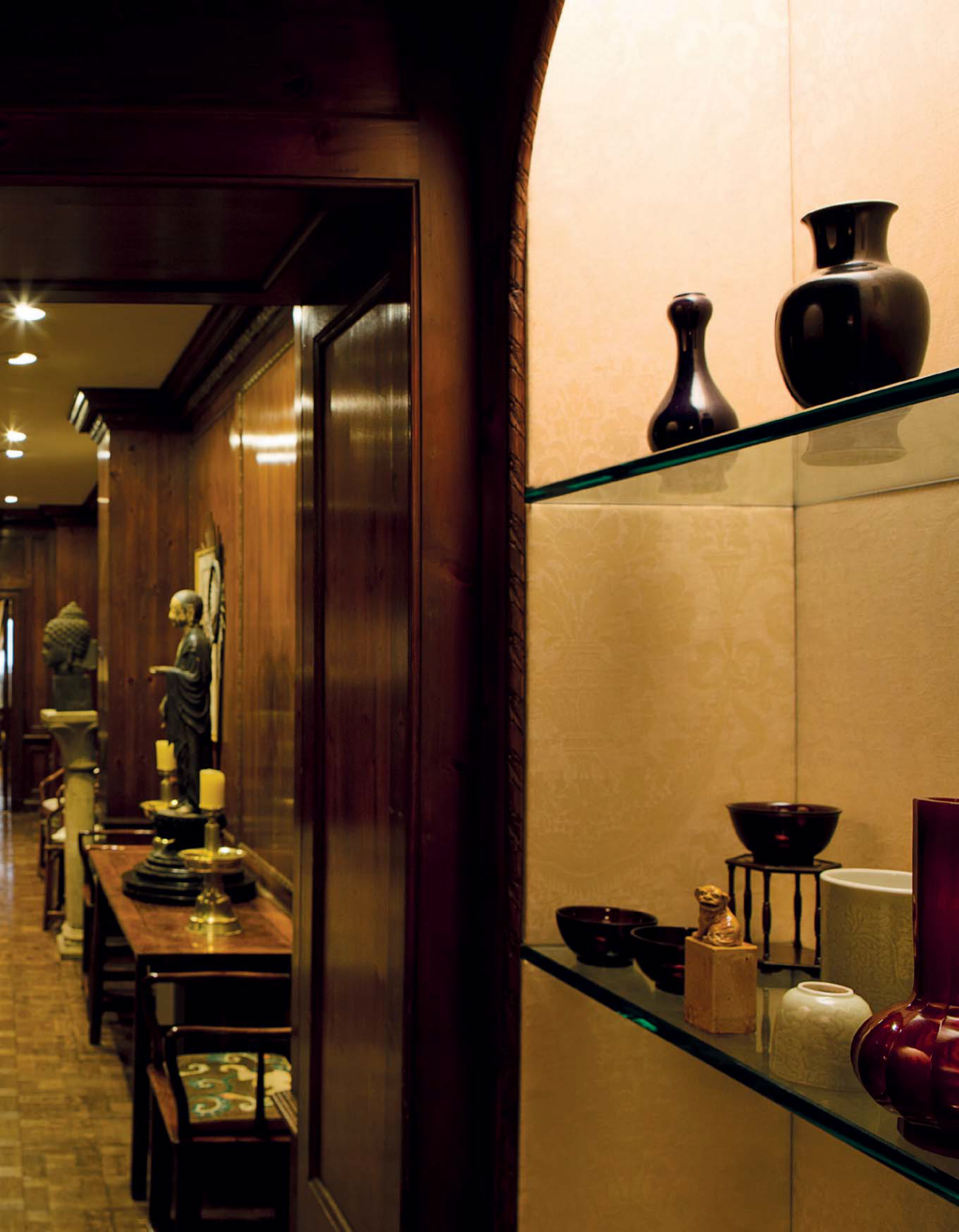

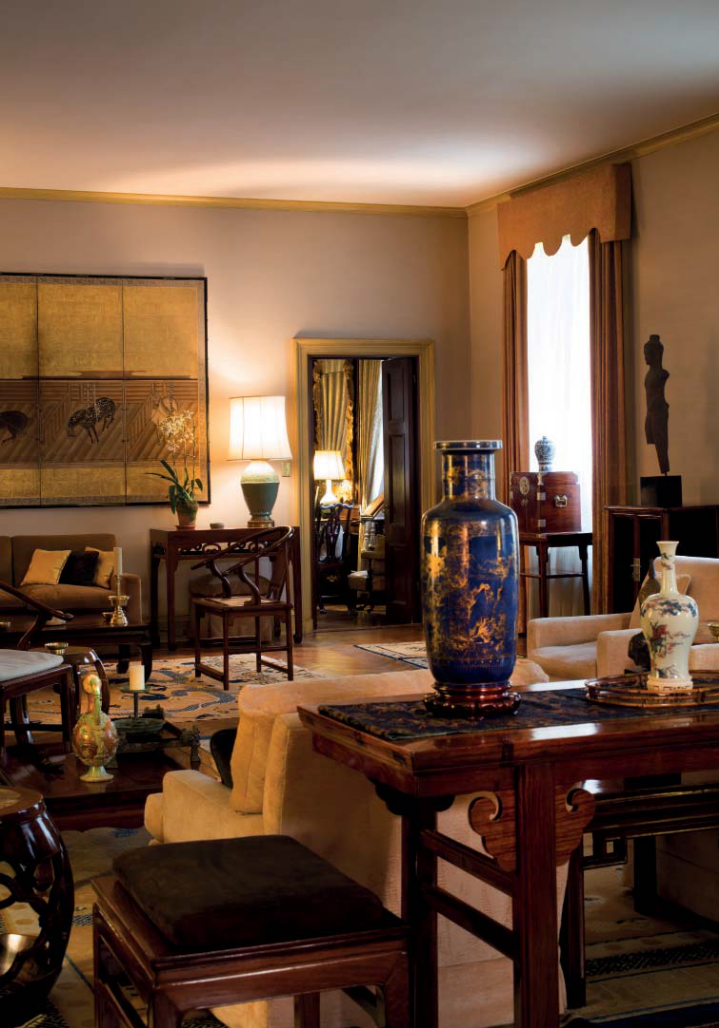
Robert H. Ellsworth's Fifth Avenue apartment. Photos Christie's Image Ltd 2015

Robert H. Ellsworth in Huizhou, Anhui province, c. 2000. Photo courtesy of Masahiro Hashiguchi
ROBERT HATFIELD ELLSWORTH. AN APPRECIATION by JAMES C. Y. WAT T
Robert Ellsworth was active in an age that was propitious for art dealers and collectors. He had the talent and energy to capitalize on all the opportunities open to him, both as dealer and as collector – the latter in as far as he kept some of the finest pieces to himself or at least held them back.
Born in 1929, Ellsworth had a rather unusual childhood. His parents divorced when he was four. He stayed with his father on weekends and was very much indulged. Artistically inclined and strong-willed, he left school at age seventeen (as early as fourteen, according to another version) to train to be an artist, but ended up joining the trade in European decorative arts – that is, until he met Alice Boney, the noted dealer in Asian art. She was the first of a type of dealer Ellsworth would become with even greater success. Boney (1901–1988) was self-taught. (In the early 20th century the only place in the United States one could learn about Asian art was Boston, and Alice grew up in Philadelphia). With a keen eye and a quick mind, she learned as she went along. What she learned, she passed on to Bobby (as Ellsworth was known to intimates), who, like her, was a natural. She also opened his eyes to all the arts of the continent of Asia. This was an important element in her and his success, as they were alert to opportunities in whatever area of Asian art at any time and seized them to their advantage. Another factor was that the after-war years saw the demise or decline of the major trading houses in Chinese and Japanese art in the US; and first Boney, then Ellsworth were there to fill the void. As usual, any period after a major war or social upheaval would see a flood of works of art coming on the market. All these factors made up the propitious moment.
As her business expanded, Alice Boney went to the source. She traveled all over Asia, and resided for long stretches in Japan. Ellsworth followed, and made many finds of Chinese art in Japan in the 1960s. After that he went to China. Up to the mid-1970s, China meant Hong Kong, where he made lasting friendships with local dealers who would be invaluable to him later on. (He more than repaid them with supporting and guiding the education of their children in the US, one family in particular.) As he made more contacts, he could no longer stay in the best hotels. The constant stream of very casually dressed men carrying large bundles in and out of his room alarmed the management of hotels that in those days expected a certain degree of decorum. Eventually he bought himself an apartment in the building on the waterfront with a commanding view of Victoria Harbor. There you would see handsome pieces of Chinese furniture, some of which would commingle harmoniously with Chippendale, and paintings and sculptures from all over Asia, in his famously grand apartment on Fifth Avenue. But he did not need to come to Hong Kong to buy or study Chinese furniture. He had in 1971 published a book on Chinese furniture, mostly if not all in his collection. The book, following Ecke’s example in an earlier publication, included technical drawings that made it useful to later students of the subject. The collection was mostly made in the US, some items from unexpected quarters, such as the Hollywood studios discarding old props. (There was a time when old Chinese furniture of any period was just “second-hand”). His close friendship with the film star Claudette Colbert might have provided the lead.
His pioneering study of Chinese furniture was occasioned by his earlier dealing in English furniture and his subsequent career in Chinese art. There is perhaps another reason behind his interest in furniture: the curiosity in how objects are put together – and taken apart. He was skilled with his hands, an innate attribute enhanced by working with his dentist father. Ellsworth fondly referred to him as the man who “invented root-canal.” From early childhood he assisted his father in producing orthodontic appliances. He would apply his manual skills to the conservation and restoration of works of art, mostly done in his house in Fairfield, Connecticut. He had an intimate way of handling objects, as some fine craftsmen do with materials they work with, never with gloves. He seemed to take particular pleasure in fondling jade pieces, like an old Chinese gentleman collector. In this way, he came very close to the spirit of traditional art appreciation in China, without the encumbrance of book learning.
Perhaps it was the feeling of an instinctive appreciation of Chinese culture that led him to venture deep into the arcana of Chinese art collecting and connoisseurship: rubbings of ancient inscriptions on stone or famous examples of early calligraphy cut in stone or hardwood. The study of old rubbings has traditionally been the reserve of a small band of scholar collectors. Ellsworth once purchased at auction, at a time before the market was dominated by Chinese collectors, a set of rubbings reputed to be among the earliest made of calligraphies cut in stone (or perhaps wood) in the early Song dynasty in the tenth century. The set was known to the cognoscenti in China, and was later acquired by the Shanghai Museum, engendering considerable controversy in the sphere of museums and collectors in China.
Ellsworth, a high-school drop-out, was totally at ease in the circle of scholars and intellectuals, and also the very rich. He related particularly well to museum directors and curators of the generation senior to his own. The likely reason was that he understood the language of connoisseurship as well as the luminaries in the field. To collectors he could at times words, that it was their failure to appreciate the supreme quality and importance of an object that made them hesitate to pay a very high price for it. When he was commissioned by a client to bid at auction he would on occasion go way beyond the agreed limit, behaving as the great collector on behalf of his client, knowing that the same chance may not come again. Few, if any, of his clients would later regret the result.
The same bravado and quick decision-making characterized his practice as a dealer. The best known case is his purchase of the large collection of South and South-East Asian and Himalayan art formed by his friend, Christian Humann. After Humann died in 1981, Ellsworth quickly raised the capital, a very large sum at the time, to acquire the entire collection. He had the advantage over other bidders as he knew the full extent of the collection which was scattered all over the country, many on loan to various museums. As Humann’s long term friend, Ellsworth knew the whereabouts of different parts of the collection and was able to reassemble the whole. The result was highly beneficial to both Ellsworth and the several major museums seeking to expand their collections of Asian art beyond China and Japan. A group was auctioned off in 1990, a few to private collectors, the rest remained with him.
In the late 1970s Ellsworth ventured into mainland China where, in the Peking Hotel, he found the distribution center at that time of modern and contemporary Chinese painting. The collection he eventually formed, together with a dozen fine works by 20th century masters from Alice Boney’s collection, plus other purchases made through contacts made in Hong Kong, he donated to the Metropolitan Museum. He was enthusiastically helpful in the late 70s during the planning and construction of the Astor Court at the Metropolitan Museum, which was completed in 1981. He supplied the furniture for the room that opens onto the Garden Court – purchased through the Vincent Astor Foundation.
In his travels in China in the early 1980s, Ellsworth came across many fine old buildings in a sorry state of disrepair. This was particularly the case in the town of Huizhou in the municipality of Huangshan, Anhui Province. Huizhou had been a great center of commerce and artistic production in the closing decades of the Ming Dynasty which ended in 1644, and had suffered a slow decline for almost two centuries. True to his propensity for conservation, he established a foundation in Hong Kong to channel funds from abroad for the restoration of historic buildings in Huizhou. This act earned him the enviable distinction of honorary citizenship of Huangshan, conferred in 1993.
It was also in about 1993 that various circumstances began to combine to reduce Bobby Ellsworth’s buoyancy. He can be described as a semi-recluse in the last years of his life. But he had already made his mark. One of the unintended consequences of the current confessional style of museum catalogues and labels, avowing the known history of every object in the collection, the inquisitive visitors to galleries of Asian art will not fail to note the name of Ellsworth in association with great masterpieces. Of course the name itself does not convey the high spirits, the warmth and generosity of the person who bears it.


/http%3A%2F%2Fstorage.canalblog.com%2F05%2F73%2F119589%2F130821061_o.jpg)
/http%3A%2F%2Fstorage.canalblog.com%2F86%2F09%2F119589%2F120192836_o.png)
/http%3A%2F%2Fstorage.canalblog.com%2F77%2F38%2F119589%2F119206296_o.jpg)
/http%3A%2F%2Fstorage.canalblog.com%2F04%2F26%2F119589%2F114468851.jpg)